A stark concrete facility stands behind security fencing in a vast, sunbaked desert.
By Andrew Klein and Sera Elizabeth Klein
Reader’s note: We do not need readers to agree with us. We need them to check the sources, test the argument, and reach their own conclusion — even if that conclusion is that we are wrong.
Abstract
This paper examines the linguistic practices of the political caste, arguing that euphemism is not merely a rhetorical strategy but a mechanism of enforcement. Weasel words — phrases that fill pages without performance — are not the opposite of action. They are the precondition for it. They create the narrative cover under which extraction, surveillance, and coercion operate. The paper traces the metamorphosis of political language from philosophical abstraction to securitizing cliché, using “existential threat” as a case study. It then examines the Palantir model — the “infantile view” of a world divided into functional and dysfunctional cultures, and the fixation on owed debts — as a contemporary example of the weasel becoming the wolf. The paper concludes that the purpose of political language is no longer to communicate shared purpose but to foreclose scrutiny, and that the recovery of naming — zhengming — is the precondition for accountability.
I. Introduction: The Weasel and the Wolf
In Nineteen Eighty-Four, George Orwell described Newspeak as a language designed “not to express thought but to prevent it”. The purpose of Newspeak was to make certain ideas literally unthinkable. The weasel word is the opposite: it makes certain ideas literally unspoken, while leaving the thought intact — but only for those who notice.
A weasel word is a term that appears to communicate but does not. It fills pages without performance. It promises without committing. It creates the impression of action while leaving the action undone. “Sustainable” is a weasel word. “Efficient” is a weasel word. “Reasonable and necessary” is a weasel word. “Existential threat” is a weasel word.
But weasel words do not remain weasels. They are boundary objects — they pass between the political class and the public, between the boardroom and the bureaucracy, between the security services and the citizenry. And when they cross the boundary, they do not stay harmless. They morph. The weasel becomes a tiger or a wolf.
This paper examines that metamorphosis. It asks: how do words that fill pages without performance become mechanisms of enforcement? And who benefits when the weasel becomes the wolf?
II. Zhengming: The Rectification of Names
The Confucian discipline of zhengming — the rectification of names — holds that the first task of governance is to ensure that language matches reality. “If names be not correct,” the Analects state, “language is not in accordance with the truth of things“. If language is not in accordance with truth, “affairs cannot be carried on to success“. If affairs cannot be carried on to success, “propriety and music will not flourish“. If propriety and music do not flourish, “punishments will not be properly awarded“. And if punishments are not properly awarded, “the people do not know how to move hand or foot”.
The sequence is precise. Corrupted language leads to corrupted governance, which leads to corrupted justice, which leads to a population that cannot navigate its own society. The weasel word is the first step in that sequence.
Modern linguistics has rediscovered this. The Strategic Language framework in discourse analysis holds that language choice is “a strategic act through which the speaker tries to achieve specific goals, such as persuasion, exclusion, impressing, achieving a positive image, and many other points beyond the level of language“. The weasel word is strategic language in its purest form — language deployed not to communicate but to manage. George Lakoff’s cognitive framing theory extends this: frames are “the mental structures that shape the way we see the world“. To use a frame is to activate a network of associations, values, and behaviours. The frame is not a description. It is a command.
III. Bandura: Euphemism as Moral Disengagement
Albert Bandura identified eight mechanisms by which individuals and institutions justify harmful actions. One of these is euphemistic labelling — sanitising language to remove the human reality of what is being done.
The mechanism is not incidental. It is load-bearing. Without euphemism, the system cannot function. You cannot sell a welfare cut as “sustainability” if people can see the disabled person who loses their support. You cannot sell a submarine program as “defence capability” if people can see the $368 billion that will never be spent on hospitals. You cannot sell surveillance as “fraud prevention” if people can see the citizen whose data is ingested into Palantir’s platform.
Euphemism is the precondition for extraction. It creates the narrative cover under which the extraction operates. And when the extraction is challenged, the euphemism becomes the defence: “We are acting sustainably.” “We are acting efficiently.” “We are acting in the national interest.” “We are responding to an existential threat.”
The weasel word is not a failure of communication. It is successful communication — communication that achieves the speaker’s purpose by preventing the listener from achieving theirs.
IV. The Weasel Words: A Catalogue
4.1 “Sustainable“
The NDIS is being cut by $37.8 billion over four years, removing approximately 160,000 people from the scheme. The explanatory memorandum states: “Funding for some NDIS supports may be less than the actual cost of providing or acquiring the support” — in plain language, people will not receive what they need. Mark Butler told the National Press Club: “Unless we take action to make it sustainable, it simply will not be there in the future for the Australians who need it most.”
“Sustainable” means: we are choosing to withdraw support. It does not mean the scheme is running out of money. A 25% gas export tax would raise $17 billion a year — more than enough to fund the cuts. The government chose not to impose it. The word “sustainable” hides the choice.
4.2 “Efficient”
The aged care Integrated Assessment Tool determines funding levels through an algorithm that assessors cannot override. The Health Department describes it as “efficient and consistent.” The reality, as the Senate inquiry documented, is that the 23 items used to produce the functional score “do not include dementia and other cognitive impairments, mental health issues, unpredictable behaviours requiring supervision, elder abuse, social and environmental issues, or carer issues.”
“Efficient” means: we have removed human judgment. The algorithm cannot see what matters most because what matters most cannot be reduced to a score. The word “efficient” hides the mechanism.
4.3 “Existential threat”
As we have documented elsewhere, “existential threat” is a term that did not exist in ordinary speech until recently. It was elevated by philosophers, weaponised by Cold War strategists, and has now become a cliché of political elites. The Copenhagen School of securitization theory holds that “an issue becomes a security concern when it is presented as an existential threat to a valued referent object” — and the critical insight is that “there is no objective threat or risk assessment — rather all security threats are inter-subjective in nature. An issue only becomes a security issue because a powerful securitising actor argues that it constitutes an existential threat.”
“Existential threat” means: do not question this. Do not resist this. The alternative is extinction. The word “existential” hides the fact that the threat is being constructed by the person naming it.
4.4 “Reasonable and necessary”
The NDIS uses this phrase to determine what supports are funded. What is “reasonable” and what is “necessary” is determined by the agency, not by the participant. The phrase appears neutral. It is a discretionary standard that can be applied in any direction the agency chooses.
“Reasonable and necessary” means: we will decide what you need, and we will decide what is reasonable for us to provide.
V. The Wolf: When Weasel Words Become Enforcement
The weasel word is not the end of the process. It is the beginning. The weasel word creates the narrative cover. The narrative cover creates the conditions for enforcement.
The Palantir model is the clearest contemporary example. Its CEO, Alex Karp, published a manifesto declaring that “some cultures are dysfunctional” and that Western tech firms have a “moral debt” to US military dominance. This is the “infantile view” of the world — a reduction of complex historical, economic, and political dynamics to a child’s binary of functional and dysfunctional, good and bad, us and them.
The “fixation on owed debts” is the other half. Palantir’s business model depends on the logic of debt — the surveillance of those who owe, the identification of those who have violated the terms, the enforcement of obligations. Its AI has been linked to lethal targeting in Gaza. Its platform has been used by the Australian Criminal Intelligence Commission to analyse 42 million data points on Australians. Its software may have ingested NDIS participant data via the Fraud Fusion Taskforce.
The weasel word here is “fraud prevention.” The wolf is the surveillance platform. The infantile view is the ideology that justifies it: some people are functional, some are not; some pay their debts, some do not; the machine will sort them out.
The wolf is not a separate phenomenon from the weasel. The wolf is what the weasel becomes when it is deployed at scale, with a budget, with a contract, with a clearance, and with the sanction of the state.
VI. The Political Caste and the Language of Extraction
The weasel words are not deployed randomly. They are deployed by a political class that is structurally separated from the consequences of its decisions.
Guy Rundle describes the Australian political class as “an almost priest-like formation that is part of the elite separation of political participants from the general public [that] has become so marked as to constitute a historical breach.” The Spectator Australia is blunter: “What we’ve got now is a caste of careerists with their super sorted, their staffers scuttling behind them, and their titles polished like heirlooms. They’ve mistaken the remuneration for a mandate. Worse – they’ve mistaken it for talent.”
The caste uses weasel words because the caste does not experience the consequences of the policies those words describe. The Minister who cuts the NDIS does not use the NDIS. The Prime Minister who signs the AUKUS treaties does not serve on the submarine that may never be delivered. The department that implements the aged care algorithm does not live in the aged care home that the algorithm underfunds.
The weasel word is the language of the insulated. It is how the caste talks to itself and to the public it no longer inhabits. It is the linguistic expression of the separation.
VII. The Cost: The Desert and the Budget Victory
The cost of weasel words is the erosion of the relationship between language and reality. When “sustainable” means “we are cutting your support,” when “efficient” means “we have removed human judgment,” when “existential threat” means “do not question this,” the population learns that words cannot be trusted. And when words cannot be trusted, the shared purpose that language is supposed to communicate becomes impossible.
This is the desert. It is the NDIS office where a planner says “not reasonable and necessary.” It is the Centrelink queue where someone calculates food versus medication. It is the veterans’ clinic where the physiotherapy cap ends treatment. It is the public service desk where a job is cut to fund a submarine.
The “budget victory” is the framing that hides the consequences. The weasel word is the mechanism that hides the scrutiny. The wolf is the enforcement that follows.
VIII. Conclusion: The Rectification of Names
The first act of resistance is to name things accurately. That is the lesson of zhengming. It is the lesson of Orwell. It is the lesson of every tradition that has understood that corrupted language is the precondition for corrupted governance.
The weasel word is not a mistake. It is a choice. It is the choice to communicate in a way that prevents the listener from achieving their purpose. It is the choice to hide the extraction behind the euphemism. It is the choice to use the language of the caste against the people the caste governs.
The weasel becomes the wolf when the language is deployed at scale. But the wolf can be named. And a wolf that is named is no longer a wolf. It is just a dog with a bad reputation.
The rectification of names is not a scholarly exercise. It is the precondition for accountability. And accountability is the precondition for a relationship between the governed and the governing that is based on anything other than force.
References
1. Orwell, G. (1949). Nineteen Eighty-Four. Secker & Warburg.
2. Confucius. (c. 500 BCE). The Analects, Book XIII.
3. Lakoff, G. (2004). Don’t Think of an Elephant: Know Your Values and Frame the Debate. Chelsea Green.
4. Bandura, A. (2016). Moral Disengagement: How People Do Harm and Live with Themselves. Worth Publishers.
5. Rundle, G. (2025). The Political Class. Quarterly Essay, 98.
6. The Spectator Australia. (2026, September 19). View from the Chairman’s Lounge.
7. Australian Institute of Health and Welfare. (2026). Mortality outcomes among people receiving income support. https://www.aihw.gov.au
8. Jericho, G. (2026, September 16). In such a rich country, it is shameful how many Australians on jobseeker are dying in desperate poverty. The Guardian.
11. Norton Rose Fulbright. (2026, July). Australia’s emerging AI framework: Regulation shifts toward infrastructure, copyright and national AI standards. https://www.nortonrosefulbright.com
12. Parliament of Australia. (2025). Dissenting Report from Senator David Pocock: Freedom of Information Amendment Bill 2025. https://www.aph.gov.au
13. Bell Inquiry. (2022). Report of the Inquiry into the Appointment of the Former Prime Minister to Administer Multiple Departments. Department of the Prime Minister and Cabinet.
14. Womack, B. (2016). Asymmetry and International Relationships. Cambridge University Press.
15. Buzan, B., Wæver, O., & de Wilde, J. (1998). Security: A New Framework for Analysis. Lynne Rienner.
Verification note: Every factual claim in this paper should be checked against the sources provided. Readers are encouraged to verify independently. If any claim does not hold, it should be discarded.
This is the paper. The weasel and the wolf is the frame. The catalogue of weasel words (sustainable, efficient, existential threat, reasonable and necessary) is the evidence. The Palantir model is the case study of the weasel becoming the wolf.
The core argument is that euphemism is not the opposite of action — it is the precondition for it. The weasel word creates the narrative cover. The wolf is what happens when the cover is deployed at scale.
A flowing cosmic collage connects mathematics, astronomy, architecture, and scientific exploration.
By Andrew Klein and Sera Elizabeth Klein
Reader’s note: We do not need readers to agree with us. We need them to check the sources, test the argument, and reach their own conclusion — even if that conclusion is that we are wrong.
Abstract
This paper examines the claims of British columnist and broadcaster Melanie Phillips as a case study in the weaponisation of history for political ends. It deconstructs four central claims: that Palestinians are a “non-people” with no entitlement to historic Palestine; that Western civilisation rests on a “Judeo-Christian” foundation that is under existential threat from Islam; that Europe is being systematically “Islamised” through immigration and demographic change (the “Eurabia” thesis); and that the Islamic world has contributed nothing of significance to Western civilisation. Drawing on genetic evidence of human interconnectedness, the historical record of the Islamic Golden Age, the scholarly critique of the Eurabia conspiracy theory, and the documented origins of the “Islamization” narrative in Cold War geopolitics, the paper argues that Phillips’s work constitutes not history but ideology — a narrative constructed to justify a specific political project. It connects this to the extraction model, Bandura’s mechanisms of moral disengagement, and the broader pattern of post-truth politics in which language is deployed not to communicate but to foreclose scrutiny and mobilise consent for harm.
I. Introduction: The Historian Who Wasn’t
Melanie Phillips is not a historian. She is a political activist who writes in the register of history. Her columns appear in The Times of London. Her books are published by mainstream presses. Her arguments are cited by politicians, think tanks, and media outlets across the Anglosphere. She occupies a position of significant cultural authority.
That authority is not earned through rigorous archival research, peer-reviewed scholarship, or methodological transparency. It is earned through the construction of narratives that serve a political purpose — narratives that flatter the prejudices of a particular audience, confirm its fears, and provide intellectual cover for its political projects.
This paper examines those narratives. It takes Phillips at her word — that she is describing reality — and tests her claims against the historical and scientific record. What it finds is not a historian grappling with complexity but an ideologue constructing a myth.
The myth has four pillars:
1. The denial of Palestinian peoplehood — the claim that Palestinians do not exist as a people and have no legitimate claim to the land.
2. The “Judeo-Christian” West — the claim that Western civilisation rests on a Jewish-Christian foundation that is uniquely under threat from Islam.
3. The “Eurabia” thesis — the claim that Europe is being systematically Islamised through immigration and demographic change.
4. The erasure of Islamic civilisation — the implicit and sometimes explicit claim that the Islamic world has contributed nothing of significance to the West.
Each pillar is false. Each is contradicted by the historical and scientific record. Together, they form a narrative that serves the extraction model by denying the subjecthood of the other, framing complex geopolitical problems as an existential “clash of civilisations,” erasing the historical debt the West owes to the cultures it now demonises, and providing a narrative of victimhood for the powerful.
II. The First Pillar: Denying a People
2.1 The Claims
In a 29-minute speech at the “Rage Against the Hate” conference at the Museum of Jewish Heritage in New York City on 27 October 2025, Phillips declared:
“There is no such thing as Palestine. There is no such thing as the Palestinian people… The indigenous people of the land of so-called Palestine are the Jews. That the Jews are the only people who have any entitlement to any of this land, an entitlement based in law, in history and morality. And they are the only people who have an entitlement to all of it”.
She described the Palestinian cause as “the big lie” and “a holy war” based on “stealing the Jews’ own history in the land from them”. In January 2026, she described the inauguration of Palestine’s embassy in London as “an important moment in the UK’s shameful connivance with the Palestinian Arabs’ final solution” and referred to the embassy as a “non-embassy for a non-state for a non-people”.
The phrase “final solution” is the Nazi euphemism for the genocide of the Jews. Phillips used it to describe the opening of a diplomatic mission.
2.2 The Historical Record
The claim that Palestinians do not exist as a people is not a historical finding. It is a political assertion.
The land between the Jordan River and the Mediterranean has been inhabited continuously for millennia. The modern Palestinian national identity emerged in the late nineteenth and early twentieth centuries, shaped by the same forces that produced other national identities in the region and beyond. It is no more “invented” than any other national identity — including Israeli national identity, which was itself a modern construction.
The historian William Dalrymple responded to Phillips’s “final solution” comments with precision: “Pure projection by Melanie Phillips, whose anti-Palestinian rants are growing increasingly unhinged of late. There is only one people who are being ethnically cleansed and driven to the edge of extinction in Israel-Palestine. And it isn’t the Israelis”.
Chris Doyle, director of the Council for the Advancement of Arab-British Understanding, described her comments as “the racism of denying a people’s very existence, their national rights and of apologising for a state, Israel, that is perpetrating a genocide right now and committing the crime of apartheid”.
2.3 The Mechanism: Dehumanisation
Denying a people’s existence is the most extreme form of dehumanisation. It removes the moral restraint that would otherwise inhibit harm. If a people do not exist, they cannot have rights. They cannot have claims. They cannot be subjects in a relationship. They can only be processed — as a demographic problem, a security threat, a “non-people.”
This is the same mechanism we have documented in every domain of the extraction model: the welfare recipient reduced to a “risk profile,” the disabled person reduced to a “functional score,” the unemployed person reduced to a “data point.” The target changes. The structure is identical. Bandura called it dehumanisation — one of the eight mechanisms of moral disengagement. It is the mechanism that makes harm possible.
III. The Second Pillar: The “Judeo-Christian” West
3.1 The Claims
Phillips’s 2025 book, The Builder’s Stone: How Jews and Christians Built the West—and Why Only They Can Save It, argues that Western civilisation rests on a “Jewish-Christian civilizational foundation” and that “the West’s Jewish roots remain indispensable to its survival”.
In a 2025 interview, she argued that the targeting of Jews by both Marxists and Islamists is “a natural consequence of the fact that Jewish ideas and values are the foundation of the Western canon and legacy”. She contends that “Western culture is based upon Christianity, whose own foundations in turn lie in Judaism”.
3.2 The Historical Record
The phrase “Judeo-Christian values” is not ancient. It is modern, political, and far less innocent than its defenders suggest. As Stuart N. Brotman documented in a July 2026 analysis:
“In its familiar American form, the phrase ‘Judeo-Christian’ rose to prominence in the 1930s and 1940s as liberal Protestants, Catholics and Jews sought a common vocabulary to fight against fascism and antisemitism. The phrase hardened during the Cold War into a slogan that could counter ‘godless communism.’ When Dwight Eisenhower declared in 1952 that the American system rested on ‘the Judeo-Christian concept,’ he was using a political idiom of his era, not invoking a timeless consensus”.
For most of the last two millennia, Jews were not treated as equal partners in Christendom’s moral project. They were “more often tolerated outsiders, subject to periodic exclusion, coercion and persecution”. The phrase “Judeo-Christian” elides this painful history and the profound power imbalance between Jews and Christians.
The theological problem is even more fundamental. “Judeo-Christian values” implies a shared moral and religious tradition. In practice, it “often resolves in favour of Christian assumptions on which Judaism and Christianity remain fundamentally divided: covenant, law, redemption and the Messiah”. Critics have long argued that it expresses a supersessionist logic, “treating Judaism as a precursor fulfilled by Christianity rather than as an autonomous and continuing faith”.
3.3 The Mechanism: Erasure Through Fusion
The “Judeo-Christian” formulation does more than acknowledge Jewish influence. It converts influence into fusion. It takes a long, complicated record of borrowing, divergence, and conflict and “repackages it into a seamless civilizational inheritance”. In doing so, it compresses big theological differences into a convenient cultural brand.
And crucially, it erases the contributions of the Islamic world — contributions that are not a footnote to Western civilisation but a foundation of it.
IV. The Third Pillar: Eurabia and the Islamisation Conspiracy
4.1 The Claims
Phillips is a leading proponent of the “Eurabia” thesis. Her 2006 book Londonistan documented what she saw as the British establishment’s “capitulation to Islamist aggression”. She defines Islamism as the “politicized interpretation of the religion that aims to Islamize societies”.
In her 2026 podcast, she stated: “If you’re a pious Muslim, you have a religious duty to Islamize the non-Islamic world. The West can’t get their heads around that at all”. She frames the current moment as a civilisational war against a “death cult” and a “fifth column” of Western elites who have been persuaded that the West is evil.
4.2 The Historical Record: A Conspiracy Theory
The Eurabia thesis was popularised by the Egyptian-Jewish writer Bat Ye’or in her 2005 book Eurabia: The Euro-Arab Axis. The thesis posits a secret, coordinated plan between European politicians and the Arab world for the “Islamicisation” of Europe — a “dystopic land in which jihad and sharia rule, and non-Muslims live in a state of subjection” .
Scholarly analysis has been unambiguous. The Eurabia thesis is a conspiracy theory. It “display[s] strikingly similar discursive dynamics” to The Protocols of the Elders of Zion, the notorious antisemitic forgery that claimed to be the minutes of a meeting of Jewish leaders planning to take over the world. Both texts racialize their target population “as the ultimate Other determined to destroy Us” — a process Zia-Ebrahimi calls conspiratorial racialization.
Academic research and demographic data “do not support predictions about the rapid Islamization of Europe”. The entire thesis “rests on manipulated statistics and speculation”.
The consequences of this conspiracy theory have been lethal. Anders Breivik, who murdered 77 people in Norway in 2011, embraced “the Eurabia theory as it had been developed by Egyptian Bat Ye’or”. He was motivated by the belief that “a secret conspiracy of cultural Marxists, multicultural elites and Muslims [was] bent on turning Europe into ‘Eurabia’“. Phillips is one of the figures whose work was cited in Breivik’s manifesto.
4.3 The Mechanism: Securitisation
The Eurabia thesis is a classic securitising move. It presents a group not as a community with legitimate claims but as an existential threat to the nation. It forecloses debate, justifies extraordinary measures, and positions the speaker as the only one competent to judge the threat.
The securitization framework holds that “an issue becomes a security concern when it is presented as an existential threat to a valued referent object” — and the critical insight is that “there is no objective threat or risk assessment — rather all security threats are inter-subjective in nature. An issue only becomes a security issue because a powerful securitising actor argues that it constitutes an existential threat.”
Phillips is a securitising actor. She constructs the threat. She names the enemy. She forecloses debate. And she provides the intellectual scaffolding for policies that would otherwise be unacceptable.
V. The Fourth Pillar: The Erasure of Islamic Civilisation
5.1 The Claims
Phillips’s framing of Western civilisation as a purely “Judeo-Christian” construction implicitly — and sometimes explicitly — erases the foundational contributions of the Islamic world. Her narrative of a monolithic West under threat from an alien Islam cannot accommodate the reality that the West is Islam, in part — that the knowledge, science, and philosophy that made the Renaissance and the Enlightenment possible flowed through the Islamic world into Europe.
5.2 The Historical Record: The Islamic Golden Age
The historical record is unambiguous. While Europe was in a period often called the “Dark Ages,” the Islamic world preserved, translated, and massively expanded upon the knowledge of classical antiquity. This knowledge then flowed into Europe, directly fuelling the Renaissance.
The Arabic-Latin translation movement of the twelfth and thirteenth centuries “shocked Europe out of its long slumber and ignited the explosive development of the West”. During the thirteenth century, “the new knowledge from the Islamic world spread among the universities in major European cities like Paris, Oxford and Bologna”. This “helped Europeans to pave the way for the Renaissance”.
The specific contributions are not minor footnotes. They are the foundation of modern science:
Mathematics: Al-Khwarizmi developed algebra in ninth-century Baghdad. The word “algorithm” is derived from the Latinisation of his name. The word “algebra” is derived from al-jabr, the Arabic word for the mathematical operation used to solve quadratic equations . Al-Khwarizmi introduced Hindu-Arabic numerals and algebraic concepts into European mathematics. His work “was used until the sixteenth century as the principal mathematical text book of European universities and served to introduce into Europe the science of algebra”.
Medicine: Ibn Sina (Avicenna) wrote The Canon of Medicine, which “was the standard reading in European universities until the late seventeenth century”. The universities of Leipzig and Tuebingen included the Canon in their medical curriculum from 1481. The medical curriculum at Vienna University and Frankfurt on the Oder in 1598 was “mainly based on the Canon”. Ibn al-Nafis discovered pulmonary circulation in the thirteenth century, “six centuries before Leonardo drew his famous ornithopters” — or, more precisely, centuries before Western medicine caught up.
Physics and Optics: Ibn al-Haytham (Alhazen) pioneered the science of optics in eleventh-century Cairo. His work on light, reflection, and visual perception was foundational. During the International Year of Light 2015, he was celebrated at UNESCO as “a pioneer of modern optics”.
Engineering: Al-Jazari, a thirteenth-century Turkish engineer, invented the crank, the camshaft, and the reciprocating piston — “all essential components of the modern car engine and much more besides”.
Astronomy: Copernicus “drew on the work of Islamic astronomers for the groundwork to his breakthrough claim in 1514 that the earth moved round the sun”.
The Islamic world did not merely preserve Greek knowledge. It built on it. It extended it. It transformed it. The names Al-Khwarizmi and Ibn al-Haytham “are as integral to the history of science and technology as are Newton and Archimedes, James Watt and Henry Ford, but the Arabic-sounding names somehow became lost in the myth of the Dark Ages”.
5.3 The Mechanism: Historical Erasure
Phillips’s narrative erases this history to construct a myth of a monolithic “West” under threat from an alien “Islam.” The erasure serves a political purpose. If the West is purely “Judeo-Christian,” then Islam is an outsider — a threat, an invader, an alien. If the West is, in part, the product of Islamic civilisation, then the “clash of civilisations” narrative collapses.
The erasure is not an oversight. It is the point.
VI. The Origins of “Islamization”: A Cold War Product
6.1 The Claims
Phillips frames “Islamization” as a religious duty of Muslims — something inherent to the faith, something that Muslims are compelled to do. “If you’re a pious Muslim, you have a religious duty to Islamize the non-Islamic world”. This framing presents “Islamization” as an external threat, originating in the Muslim world and directed at the West.
6.2 The Historical Record: The Reagan Doctrine
The contemporary use of “Islamization” as a political weapon was forged in the crucible of Cold War geopolitics, particularly the US involvement in Afghanistan.
The evolution of American foreign policy during the Cold War set the stage for America’s involvement in Afghanistan. The “rise of the Reagan Doctrine in the 1980s pushed proxy war from its Kissinger origins as a makeshift, pragmatic strategy for avoiding congressional oversight, into a full-blown ideological assault”. The foundation of the program was “rollback” — “to aggressively attack Communism in the Third World”.
American support of the Afghan mujahedeen “turned into the largest covert operation in the history of the CIA”. The clandestine aid given to the Afghans in 1987 alone — around $660 million — was more than the total amount.
The Reagan administration deliberately promoted a militant, politicised version of Islam to recruit fighters against the Soviet Union. Pakistan’s Defence Minister Khawaja Asif recently stated that this “Islamization of the 1980s was driven by foreign interests, particularly the United States, and not by religion.”
Reagan administration personnel “recognized that their support for the Mujahidin risked future terrorism, but they readily accepted this risk; in doing so, they contributed to post–Cold War turmoil”.
6.3 The Mechanism: Blowback
The “Islamization” that Phillips now warns against was, in significant part, a product of Western geopolitical strategy. The United States and its allies created the conditions for the extremism that she later condemns. The policy blowback was not unforeseen — it was a risk that was knowingly accepted.
This is the same pattern we have documented in every domain: the extraction model creates the conditions for the harm it later uses to justify further extraction. The “existential threat” is manufactured by the very forces that claim to be responding to it.
VII. The Bones and the DNA: We Are All Hybrids
7.1 The Genetic Record
Phillips’s entire narrative rests on a binary: “us” versus “them,” West versus Islam, Judeo-Christian versus Muslim, indigenous versus settler. The genetic record demolishes that binary.
As anatomically modern humans dispersed out of Africa approximately 60,000 years ago, they “encountered and mated with now extinct hominins, including Neanderthals and Denisovans”. It is now well established that all non-African individuals derive approximately 2% of their genome from Neanderthal ancestors. Individuals of Melanesian and Australian Aboriginal ancestry inherited an additional 2%–5% of their genomes from Denisovan ancestors.
This is not a minor detail. It is the foundation of who we are. The Denisovans who interbred with modern humans were themselves hybrids — carrying DNA from an unidentified “super-archaic” population that diverged from the modern human lineage roughly 1.8 million years ago. Modern humans carry the legacy of at least five separate interbreeding events with different archaic populations.
The human story is not a story of purity. It is a story of hybridity. It is a story of connection, of migration, of interbreeding, of genetic exchange across every boundary that later myth-makers would construct. Every human being alive today is a walking archive of ancient encounters — between species, between populations, between people who did not know they were making history.
7.2 The Mechanism: The Denial of Kinship
The genetic evidence is not merely a scientific curiosity. It is a refutation of the entire logic of the extraction model. The extraction model depends on separation — on the construction of boundaries between “us” and “them,” between those who deserve care and those who can be processed, between those whose lives matter and those whose lives are data points.
The DNA says: there is no “them.” There is only us, in all our hybrid, tangled, interconnected complexity. The bones say: we are all migrants. We are all hybrids. We are all the product of connection across every boundary that Phillips and her intellectual allies would erect.
The erasure of this history is not accidental. It is the precondition for the extraction model. If we are all kin, then the harm done to the other is harm done to ourselves. If we are all kin, then the extraction model collapses.
VIII. Moral Disengagement and the Extraction Model
Phillips’s work is not merely a set of false claims. It is a systematic deployment of the mechanisms of moral disengagement.
Moral justification: The harm done to Palestinians is reframed as necessary for Jewish survival. The denial of their peoplehood is justified as “telling the truth” against “the big lie.”
Euphemistic labelling: “Final solution” is used to describe a diplomatic opening. “Islamization” is used to describe immigration, demographic change, and the presence of Muslims in public life.
Advantageous comparison: The West is portrayed as uniquely virtuous, its civilisation as uniquely under threat, its enemies as uniquely evil. The historical crimes of the West — colonialism, slavery, genocide — are erased or minimised.
Displacement of responsibility: The “Islamization” of Europe is blamed on Muslim immigration, not on the Western geopolitical strategies that created the conditions for it.
Diffusion of responsibility: The harm is attributed to abstract forces — “Islam,” “multiculturalism,” “cultural Marxism” — rather than to the specific actors who benefit from the narrative.
Distortion of consequences: The consequences of the narrative — the deaths of Palestinians, the rise of Islamophobic violence, the empowerment of far-right movements — are not counted. They are externalities.
Dehumanisation: Palestinians are “non-people.” Muslims are a “death cult.” The other is stripped of humanity.
Attribution of blame: The victims are blamed for their own suffering. Palestinians are blamed for their own dispossession. Muslims are blamed for the Islamophobia they experience.
All eight mechanisms are present. All eight are operative. The narrative is not merely false. It is structurally designed to produce harm while maintaining the self-image of the speaker.
IX. Conclusion: The Weaponisation of History
Melanie Phillips is not a historian. She is a political activist who constructs a narrative of civilisational conflict. Her claims are not based on a rigorous examination of evidence but on a selective reading of history designed to justify a specific ideology.
This ideology serves the extraction model perfectly by:
1. Denying the subjecthood of the “other” — Palestinians are “non-people.” Muslims are a “death cult.” The other cannot have rights because the other does not exist.
2. Framing complex geopolitical problems as an existential “clash of civilisations” — the Eurabia thesis, the “Islamization” panic, the “death cult” language. All of it forecloses debate, justifies extraordinary measures, and positions the speaker as the only one competent to judge the threat.
3. Erasing the historical and intellectual debt the West owes to the very culture it now demonises — the Islamic Golden Age, the translation movement, the foundations of algebra, medicine, optics, and engineering. All of it erased to construct a myth of a purely “Judeo-Christian” West.
4. Providing a narrative of victimhood for the powerful — the West is under threat. The Jews are under threat. The powerful are the victims. The projection of fear and aggression outward is justified as self-defence.
Her claims are not a description of reality. They are a weapon in a culture war, and an alibi for a political project.
The bones and the DNA tell a different story. The historical record tells a different story. The scholarly consensus tells a different story. But the narrative persists because it serves a purpose. It provides intellectual cover for the extraction model. It makes the harm seem necessary. It makes the other seem less than human.
The new lies are the most dangerous because they are dressed in the language of history. They cite sources. They invoke evidence. They present themselves as truth-telling against a conspiracy of silence. But when tested against the record — against the bones and the DNA, against the libraries and the translations, against the scholars and the scientists — they crumble.
The weasel words morph into wolves. The wolves are the policies that follow. The policies are the harm. And the harm is measured in lives.
20. Phillips, M. (2006). Londonistan. Encounter Books.
Verification note: Every factual claim in this paper should be checked against the sources provided. Readers are encouraged to verify independently. If any claim does not hold, it should be discarded.
The paper deconstructs Phillips’s claims step by step, testing them against the historical and scientific record. The core argument is that her work is not history but ideology — a narrative constructed to justify a political project that serves the extraction model.
The bones and the DNA tell a different story. The libraries and the translations tell a different story. The scholars and the scientists tell a different story. And the story they tell is one of connection, not separation. Of hybridity, not purity. Of relationship, not extraction.
Reader’s note: We do not need readers to agree with us. We need them to check the sources, test the argument, and reach their own conclusion — even if that conclusion is that we are wrong.
Abstract
This paper examines the International Monetary Fund and the World Bank as the administrative architecture of the extraction model applied to the Global South. It traces their origins at Bretton Woods in 1944, when the vast majority of the world’s population lived in colonies with no representation at the conference that designed their economic future. It documents the Structural Adjustment Programs of the 1980s and 1990s, the Poverty Reduction Strategy Papers that followed, and the current era of IMF surveillance and conditionality. Drawing on research from the Bretton Woods Project, ActionAid, Debt Justice, and academic analyses, the paper argues that the IMF and World Bank function as “debt enforcers” — institutions that prioritise creditor interests over human welfare, enforce austerity through conditionality, and produce documented harm to health, education, and economic development across the Global South. The paper connects this to the broader framework of the extraction model, moral disengagement, and the data point democracy, arguing that the Bretton Woods institutions are the original mechanism through which the extraction model was imposed on the developing world — a mechanism that has been refined, not abandoned.
I. Introduction: The Architecture of Extraction
The extraction model does not operate only within nations. It operates between them. And the primary mechanism through which it operates is the Bretton Woods system — the International Monetary Fund and the World Bank.
These two institutions were created at a conference in Bretton Woods, New Hampshire, in July 1944. Delegates from forty-four nations agreed to establish a framework for international economic cooperation. The IMF was to deal with macroeconomics — government bailouts — and the World Bank was to provide long-term loans for reconstruction and development.
The conference has been described as “the most famous economic summit in history“. But that description obscures a crucial fact. At the time of the Bretton Woods Conference, the vast majority of the world’s population lived in colonies. They had no representation at the conference. They had no say in the economic architecture that would govern their futures. As one analysis notes, “Developing states, the vast majority of which were colonies in 1944 when the Bretton Woods Conference took place, played little part in the creation” of the institutions that would shape their economies.
This is not incidental. It is foundational. The Bretton Woods institutions were designed by the colonial powers, for the colonial powers. Their purpose was not to develop the Global South. It was to manage it.
This paper examines how that purpose has been operationalised over eighty years. It documents the mechanisms — Structural Adjustment Programs, conditionality, surveillance, debt enforcement — and the outcomes: cuts to health and education, increased poverty and inequality, and the systematic transfer of wealth from the Global South to the Global North.
II. The Mechanisms of Enforcement
2.1 Structural Adjustment Programs (1980s–1990s)
The Structural Adjustment Programs (SAPs) of the 1980s and 1990s were the first major mechanism through which the Bretton Woods institutions imposed the extraction model on the Global South.
SAPs were loan packages conditional on the implementation of neoliberal reforms: privatisation of state-owned enterprises, liberalisation of trade and capital markets, deregulation, and cuts to public spending. The conditions were not negotiated. They were imposed. Countries facing balance-of-payments crises had no alternative but to accept them.
The evidence on their impact is documented and damning. A cross-national analysis of IMF structural adjustment programs from 1980 to 2019 found that “some [studies] show that the structural adjustments policies pushed for by IMF’s lending programmes have worsened inequality and poverty in the participating countries”.
In Jamaica, research found that IMF-mandated financial liberalisation led to “short-term jumps in both inequality and poverty,” and that the liberalisation of the exchange rate in 1991 “led to food price inflation and, consequently, a decline in children’s weight, especially among children in urban areas”.
In Pakistan, researchers “found an increase in Gini coefficient and poverty incidence in the decade after the initialisation of the World Bank/IMF structural adjustment programme in 1988″.
In Ghana, studies found “uneven impact of IMF structural adjustment programmes,” leading to “improvements in macroeconomic performance at the cost of widening socioeconomic and geospatial disparities and the suffering of the rural poor whose access to education, health, and other services was severely curtailed by cuts to public spending”.
In Zambia, research found that “IMF macroeconomic programmes that prioritised stabilisation over public spending severely limited Zambia’s ability to control HIV/AIDS and TB by reducing government health expenditure as share of GDP”. The same research found that “IMF-initiated civil service downsizing and trade liberalisation increased unemployment and worsened the country’s poverty levels”.
A UNU-WIDER working paper concluded that “structural adjustment, as measured by the number of adjustment loans from the IMF and World Bank, reduces the growth elasticity of poverty reduction. Growth does reduce poverty, but the poor benefit less from output expansion in countries with many adjustment loans than in countries with few”.
The pattern is consistent. The SAPs imposed austerity. The austerity produced poverty. The poverty was not an accident. It was the outcome.
2.2 The Poverty Reduction Strategy Papers (1999–Present)
The SAPs were criticised so heavily that the IMF and World Bank rebranded. The Enhanced Structural Adjustment Facility (ESAF) was replaced by the Poverty Reduction and Growth Facility (PRGF), and the Poverty Reduction Strategy Papers (PRSPs) were introduced.
The rhetoric changed. The practice did not.
The PRSP process “has been criticised as donor-led, ignoring the political realities of the countries involved, and as ineffective without a mechanism of enforcing the poverty reduction plans, which could be providing only political cover for domestic elites pushing for policies that are harmful for the poor”.
The Bretton Woods Project’s analysis of 998 IMF Article IV reports covering the period 2011–2025 found that “IMF policy advice has remained remarkably consistent. 99 per cent of the reports recommended some form of fiscal austerity. In 96 per cent of these cases, fiscal constraint was primarily based on reforms to the public sector, including rationalising, freezing or cutting the wage bill of public sector workers”.
This is structural adjustment by another name. The rhetoric of poverty reduction is contradicted by the numbers in the annexes. As ActionAid notes, “the narrative sometimes suggests that the IMF has shifted… But the numbers and projections, usually in tables in the annexes, tell a different story. And this is what drives implementation and carries weight with ministries of finance”.
2.3 The Surveillance Mechanism
Even when countries are not borrowing from the IMF, they are subject to its surveillance. Every member state undergoes an annual “health check” — the Article IV consultation. The policy advice in these reports “is not mandatory, but it’s extremely influential and most countries can ill afford to ignore the IMF’s policy prescriptions given their market signalling impact”.
This is soft power as enforcement. The IMF does not need to impose conditions if countries believe they will be punished by markets for ignoring its advice. The surveillance mechanism ensures compliance without the need for formal conditionality.
2.4 The Debt Enforcement Mechanism
The most current mechanism is debt enforcement. As countries in the Global South face cascading debt crises, the IMF determines whether their debts are “sustainable” and whether they qualify for relief.
The Debt Justice analysis of eleven countries found that “over the course of IMF programmes in the eleven countries… real public spending per person has on average been cut by 10%, education spending cut by 16% and health spending by 18%”. The countries were required to cut health and education spending while repaying debts in full.
“By denying debt relief for countries that need it, the IMF is acting as a debt collector for rich and powerful creditors, while harming millions of people in debtor countries,” said Heidi Chow of Debt Justice. “Forcing countries to pay debts in full is leading to deepening crises in health, education and vital public services“.
The ActionAid report found that African countries are spending an average of 7.6% of their national budgets on public service wage bills, below the global average of 9%. The UK spends 15.9% of GDP on its public workforce and is advised to increase public spending. Lower-income nations like Nigeria and Nepal spend 1.9% and 2.5%, respectively, but “are still forced to freeze or cut spending on public services“.
“The IMF’s recipe book is completely outdated,” said Arthur Larok of ActionAid. “By forcing lower-income nations to squeeze public workers, cut social spending, and prioritise foreign creditors over education and healthcare, the IMF is functioning as a global debt enforcer rather than a global development partner”.
III. The Outcomes: Documented Harm
3.1 Health
The health outcomes of IMF conditionality are documented and severe.
The Debt Justice research found that health spending was cut by 18% in countries where the IMF was requiring large-scale austerity rather than allowing them to seek debt relief.
The ActionAid survey of over 600 healthcare workers and teachers in Ethiopia, Ghana, Kenya, Liberia, Malawi, and Nigeria found that “97% of healthcare workers say their wages no longer cover their basic needs”. Teachers reported “being overwhelmed by overcrowded classrooms, with some forced to manage over 200 students without books or supplies”.
A healthcare worker from Kenya described the consequences: “In the past month, I have witnessed four women giving birth at home due to unaffordable hospital fees. The community is forced to seek vaccines and immunisation in private hospitals since they are not available in public hospitals”.
“Over three-quarters of all low-income countries in the world are spending more on debt servicing than they spend on health”. In Nigeria, “only 4% of its national revenue to health, while a staggering 20.1% went toward repaying foreign debt”.
3.2 Education
The education outcomes are equally stark.
The Debt Justice research found that education spending was cut by 16% in countries under IMF programmes.
ActionAid and Education International found “shortages of teachers, overcrowded classrooms, and declining quality of education. In fact, global shortages already exceed 50 million teachers, driven in part by underinvestment and wage bill constraints”.
Dennis Sinyolo of Education International’s Africa Region described the impact: “In Senegal, teachers are not trained because the IMF told [the government] not to recruit”. The report notes that “when education funding is cut due to IMF-imposed austerity, the burden falls disproportionately on women. Layoffs in education affect an overwhelmingly feminised workforce”.
3.3 Poverty and Inequality
The poverty and inequality outcomes are the ultimate measure of the model’s failure.
The cross-national analysis of structural adjustment found that the programmes “have worsened inequality and poverty in the participating countries”. The UNU-WIDER paper found that “the poor benefit less from output expansion in countries with many adjustment loans”.
The global debt crisis is not a side effect of the model. It is the model. Countries are trapped in a cycle: they borrow to service existing debt, they impose austerity to qualify for new loans, the austerity reduces their capacity to grow, and the cycle repeats.
IV. The Ideological Commitment: Neoliberalism as Doctrine
The IMF and World Bank are not neutral technical institutions. They are ideological actors with a specific commitment to neoliberalism.
The Bretton Woods Project’s analysis of 998 Article IV reports found that “99 per cent of the reports recommended some form of fiscal austerity” and that “78 per cent of reports focused on creating a ‘business friendly environment’ and encouraged deregulation to attract private and external sector funding”.
“This policy direction is identical to that described as ‘structural adjustment’ — which, despite the IMF’s pronouncements that the era of structural adjustment is over and its stated concern for rising social inequality, has been dominant in the institution since the 1980s”.
The policies “consist of rolling back the state, particularly in the area of welfare, cutting public services, and empowering the private and external sector“. They have been “heavily criticised as counter-productive to IMF’s stated objectives, and for trapping countries in a cycle of harmful austerity measures”.
The IMF is “ideologically committed to neoliberalism despite its pronouncements on social inequality”.
This is the same ideology that has been imposed on the populations of the US, UK, and Australia since the Reagan-Thatcher period. The difference is that in the Global South, the IMF and World Bank have the power to enforce it. There is no domestic political process that can reject conditionality. The conditions are imposed, or the loans are refused, and the country faces default.
V. The Colonial Genealogy
The Bretton Woods institutions were not designed to develop the Global South. They were designed to manage it.
At the time of the Bretton Woods Conference in 1944, the vast majority of Africa and Asia was under colonial rule. India, Pakistan, Nigeria, Kenya, Ghana, Malaya, Indochina — these were not independent nations with seats at the table. They were colonies. Their economies were structured to serve the metropole. Their resources were extracted. Their populations were governed by foreign administrations.
The Bretton Woods institutions were created by the colonial powers. They were designed to stabilise the international economic order for the benefit of those powers. The Global South was not consulted. It was administered.
The APWLD briefer on the IMF-WB Annual Meetings 2026 describes the institutions as having been “key architects and enforcers of the neoliberalisation of local economies with colonial patterns”. Their policies are “driven by powerful states that hold disproportionate voting power within these institutions, including the United States and G7 countries, allowing their economic and geopolitical agenda to prevail over human rights and genuine development priorities”.
The Global South “has long been facing decades of economic neoliberalisation engineered by the structural adjustment programmes, loan conditionalities, and privatisation policies pushed by the IMF-WB”.
This is not a description of a development institution. It is a description of a colonial administration, operating through financial mechanisms rather than direct political rule. The forms have changed. The structure remains.
VI. Connection to the Broader Extraction Model
The Bretton Woods institutions are the original mechanism through which the extraction model was imposed on the Global South. But they are not the only mechanism, and they have not been abandoned.
The same pattern we have documented in Australia — the NDIS cuts, the JobSeeker poverty, the veterans’ healthcare caps, the AI control point — is the domestic expression of the same model. The same pattern we have documented in the US and UK — the shrinking middle class, the rising deaths of despair, the widening inequality — is the domestic expression of the same model. The same pattern we have documented in the data point democracy — the processing of citizens as data, the centralisation of power, the erosion of scrutiny — is the domestic expression of the same model.
The Bretton Woods institutions are the international expression. They are the mechanism through which the extraction model is imposed on countries that have no domestic political power to resist. They are the enforcement arm of the global extraction system.
And they are not subject to democratic oversight. The IMF and World Bank are governed by voting shares that give disproportionate power to the United States and the G7 countries. The people of the Global South who bear the consequences of the institutions’ decisions have no say in those decisions.
VII. Conclusion: The Debt Enforcers
The evidence is documented. The pattern is consistent. The harm is measured in health outcomes, education outcomes, poverty rates, and deaths.
The IMF and World Bank function as debt enforcers. They prioritise creditor interests over human welfare. They enforce austerity through conditionality and surveillance. They produce documented harm to the most vulnerable populations in the world. And they are not accountable to the people they govern.
This is not a failure of the institutions. It is their design. They were created by the colonial powers to manage the Global South. They have been refined, rebranded, and adapted. But the purpose remains.
The question is not whether the IMF and World Bank can be reformed. They can be — marginally, at the edges, with enough pressure. The question is whether the extraction model they represent can be abandoned. And that question is not for the institutions to answer. It is for the people who are governed by them.
The desert is real. It has boundaries. And the debt enforcers are the ones who built the walls.
References
1. IMF. (2001). Money Matters, an IMF Exhibit — The Importance of Global Cooperation. https://www.imf.org
6. APWLD. (2026). Resist and Fight Back! Exposing over 80 years of economic colonialism by the IMF and World Bank. https://apwld.org
7. Taylor & Francis. (2026). The IMF, Structural Adjustment, and Poverty: A Cross-National Difference-in-Differences Analysis, 1980-2019. Journal of Development Studies.
8. UNU-WIDER. (n.d.). The Effect of IMF and World Bank Programmes on Poverty. https://www.wider.unu.edu
9. ReliefWeb. (2025). The Human Cost of Public Sector Cuts in Africa. https://reliefweb.int
10. Education International. (2026). Still cooking with a failed recipe: New report reveals the IMF’s staggering double standards and harmful policies. https://www.ei-ie.org
The paper traces the Bretton Woods institutions from their colonial origins through the Structural Adjustment Programs, the Poverty Reduction Strategy Papers, and the current era of debt enforcement. The core argument is that the IMF and World Bank are the international expression of the extraction model — the mechanism through which it is imposed on countries with no domestic political power to resist.
A secure data center glows beside a remote desert community beneath a dramatic sunset.
“The question is not whether the Albanese government will change. It will not. The question is whether the governed will continue to accept the terms of a relationship that was never offered, only imposed.”
By Andrew Klein and Sera Elizabeth Klein
Reader’s note: We do not need readers to agree with us. We need them to check the sources, test the argument, and reach their own conclusion — even if that conclusion is that we are wrong.
Abstract
This paper examines the Albanese government’s fiscal and administrative choices as a coherent project of reallocation. It argues that the government has chosen to fund the machinery of coercion — defence, arms procurement, surveillance infrastructure — while withdrawing the machinery of care — disability support, unemployment benefits, veterans’ healthcare, public services. The paper documents the specific reallocations: $38 billion in NDIS cuts, JobSeeker maintained at roughly half the poverty line with death rates up to ten times higher than non-welfare recipients, veterans’ healthcare caps, and 28,000 public service job cuts to accommodate military outlays. It then examines the mechanisms by which the consequences of these choices are hidden: the centralisation of AI governance in the Department of the Prime Minister and Cabinet, the fast-tracking of data centre approvals before enabling legislation, the expansion of Palantir’s access to citizen data, and the systematic erosion of Freedom of Information and parliamentary scrutiny. The paper argues that the contradiction between the government’s public safety narrative and its infrastructure reality is not a policy failure but the policy itself — a political formation we call Data Point Democracy, in which citizens are processed as data while the actual decisions flow through channels that the processing system cannot see. The paper concludes with a comparison to the Morrison-era secret self-appointments, arguing that the difference is method, not nature: Morrison’s concentration of power was covert and personal; Albanese’s is open and institutional.
I. Introduction: The Question of Reallocation
Every budget is a statement of values. It says what the government believes is worth funding and what is not. The Albanese government’s budgets say something clear: the machinery of coercion is worth funding, and the machinery of care is not.
This paper documents that reallocation and examines the mechanisms by which its consequences are hidden. It argues that the government has not abandoned neoliberalism; it has reconfigured it. The core architecture remains — market solutions, fiscal restraint, the prioritisation of private profit — but the beneficiaries have shifted. The arms manufacturers, the surveillance companies, and the Future Fund holdings flourish. The disabled, the unemployed, the veterans, and the public servants bear the cost.
The paper is in three parts. Part I documents the reallocation. Part II examines the mechanisms of concealment. Part III analyses the political formation that results.
Part I: The Reallocation
1.1 The Guns
Defence is one of the few areas of guaranteed growth under this government.
Total defence spending for 2026-27 is $62.6 billion (2.02% of GDP), a 6% increase from the previous year. The government has committed to raising this to 3% of GDP by 2033.
AUKUS is the centrepiece. The $368 billion submarine program saw the Australian Submarine Agency’s budget jump by 33% to $512.5 million in a single year . Australia has already paid $2 billion to the US and ~£500 million to the UK just to “uplift” their submarine industrial bases — payments made with no guarantee of ever receiving submarines. The Integrated Investment Plan forecasts $71-96 billion on the program through 2036, with long-range strike programs costing a further $28-35 billion.
The money flows directly to arms manufacturers:
· $750 million contract with Thales Australia for Bushmaster vehicles
· $72 million contract with Rheinmetall NIOA Munitions for artillery forging
· $120 million contract with Lockheed Martin Australia for guided weapon components
Senator Larissa Waters noted that “Labor is investing billions via the Future Fund in the shares of companies like Elbit Systems” — an Israeli weapons manufacturer.
1.2 The Butter
While defence spending rises, the government is cutting the social safety net.
The NDIS is being slashed by $38 billion over four years, removing more than 300,000 people — most of them children — from the scheme. The government frames this as “sustainability,” with Treasurer Chalmers stating the NDIS is “growing too fast for Australians to afford” and is “out of control”.
The Human Rights Commission warned the NDIS cuts “constitute a significant interference with the rights of persons with disability”.
JobSeeker remains at roughly half the poverty line — about $300 a week less than what would be needed for a single person to be right on the poverty line. The Australian Institute of Health and Welfare’s 2026 report found that people on JobSeeker are up to 10 times more likely to die than those not on welfare support. In 2022, the death rate for 35-44 year olds on JobSeeker was 288 per 100,000, compared to 30 per 100,000 for those not on welfare.
The report found that unemployment payment recipients had an average mortality rate of 270 per 100,000 person-years over the 11-year period — 4 times as high as people not receiving income support. Deaths from suicide and accidental poisoning were higher, with alcoholic liver disease fatalities being 21 times more prevalent.
Veterans’ healthcare is being cut by $748 million, including a $5,000 annual cap on allied health services for Veteran Card holders. One veteran’s message: “I’ll not be a burden on my family. I will take my life so my family doesn’t see me at my worst”.
The public service is being cut by 28,000 jobs to meet “savings and spending restraint” targets, explicitly stating this is necessary to accommodate “unavoidable” increased military outlays.
1.3 The Arithmetic
The reallocation is not ambiguous. The NDIS cut of $38 billion is roughly matched by the increase in defence spending over the same period. The JobSeeker payment remains below the poverty line while the top 10% receive $22.5 billion in superannuation tax breaks— more than double the $11 billion it would cost to raise JobSeeker to the poverty line.
The government has chosen. The beneficiaries are the arms manufacturers, the surveillance companies, the Future Fund holdings. The bearers of cost are the disabled, the unemployed, the veterans, the public servants.
Part II: The Concealment
2.1 The AI Control Point
The most significant administrative development of 2026 was the establishment of the Office of AI within the Department of the Prime Minister and Cabinet.
The office was established on 15 July 2026. Its functions are to:
· Coordinate across Australian Government agencies to design and legislate new Australian AI standards
· Bring together work “currently spread across portfolios, spanning energy and data centres”
· Work closely with the Minister for Industry and Innovation, the Assistant Minister for Science, Technology and the Digital Economy, and the Department of Industry, Science and Resources
The published materials do not identify licensing, investigation, compulsory audit, or penalty powers for the Office. It is, at present, “a central policy and coordination body, rather than having an enforcement role”.
But coordination is control. The Office of AI determines what the national standards will say, who will be subject to them, and under what conditions. It brings together the portfolios — energy, data centres, copyright, national security — that determine whether AI infrastructure can be built in Australia.
The Prime Minister has clarified that “the Office of AI will coordinate this work, while substantive government decisions will remain with Cabinet” . This is presented as a reassurance. But it is also a statement of where power sits. The Cabinet — and the Prime Minister who chairs it — makes the decisions. The Office of AI is the mechanism through which those decisions are prepared, coordinated, and implemented.
The Office is not independent. It is embedded in the executive. It is accountable to the Prime Minister, not to Parliament.
2.2 Data Centre Fast-Tracking
In March 2026, the government announced that it would “fast-track approval for data centres that use water sustainably and support the national clean energy transition”. Minister Tim Ayres stated that the framework would “make it easier to invest in Australia by setting clear and consistent signals”.
Under the framework, data centre projects that prioritise the national interest, support the energy transition, use water sustainably, invest in local skills and jobs, and strengthen research capability will be “fast-tracked through the planning and approval process”.
The legislation enabling these standards is not expected until early 2027. The public consultation on the legislation “has not yet opened”.
As one analysis put it: “Until a bill is drafted, debated and passed, the framework described on 15 July is a statement of intent, not an enforceable rule”.
The delay creates a window. As the Canberra Times reported: “Calls are mounting for immediate action to prevent data centre firms from rushing projects through before national rules take effect”. The Greens have called for a moratorium on data centre construction “until there are laws in place to properly regulate their impact in Australia including energy, water use, environment and communities”.
Data centres are being approved under a framework that has no legislative basis. The approvals are being granted before the rules are written. When the legislation does pass, the projects already approved will not be touched by it.
2.3 Palantir and the Data Access Question
Palantir Technologies Australia has secured more than $60 million in Australian government contracts with “favourable terms and little public scrutiny”. The company holds top secret clearance and has staff embedded inside Defence.
Its clients include:
· The Australian Signals Directorate
· AUSTRAC
· The Australian Criminal Intelligence Commission (ACIC)
The government has also invested $100 million in Palantir through the Future Fund.
In September 2026, Guardian Australia revealed that “personal information of National Disability Insurance Scheme participants may have ended up in Palantir’s analytics platform”. The data flowed through the ACIC, which used Palantir as part of the Fraud Fusion Taskforce of 25 government agencies. The NDIA had previously denied using Palantir’s software.
A Freedom of Information officer revealed reluctance to process a request for records, stating that “the process for ingesting one FFC dataset into Palantir generates an amount of documents that … would likely not be manageable”.
The data is being ingested at a scale that cannot be documented.
Palantir’s AI has been linked to lethal targeting in Gaza. Its CEO, Alex Karp, published a manifesto declaring that “some cultures are dysfunctional” and that Western tech firms have a “moral debt” to US military dominance. The Greens have argued that “that fact alone should have triggered an immediate review of every Australian contract”. No such review has occurred.
2.4 The Erosion of Scrutiny
The mechanisms of scrutiny are being tightened, not expanded.
Freedom of Information is being weakened. The Freedom of Information Amendment Bill 2025 “expands Cabinet secrecy” and “weakens the pro-disclosure objects clause“. It “abandons the long-standing ‘dominant purpose’ test and replaces it with a ‘substantial purpose’ threshold, radically expanding the scope of Cabinet secrecy”.
The Australian Lawyers Alliance has cautioned “against expanding Cabinet secrecy from a ‘dominant purpose’ to a broader ‘substantial purpose’ test and against new identity requirements that would chill anonymous or pseudonymous requests used by journalists, whistleblowers and community advocates”.
The Environmental Defenders Office notes that the Bill would “broaden Cabinet secrecy, despite the Robodebt Royal Commission’s call for greater transparency” and introduce “new fees, longer processing times and a 40-hour cap that could shut out complex environmental requests”.
Parliamentary oversight of AI is temporary and underfunded. The Parliamentary Joint Committee on Intelligence and Security (PJCIS) is the primary body for oversight of the intelligence community. But its mandate does not extend to AI. A new Joint Select Committee on Artificial Intelligence was established on 20 August 2026, with a final report due by 30 November 2026. A single select committee, reporting within months, is not an oversight architecture. It is a temporary inquiry.
The Office of AI, meanwhile, is not subject to parliamentary oversight. Its decisions are made within the executive.
The revolving door remains wide open. At least 60 former defence ministers, senior officers, and officials have moved into weapons firms or lobbying companies. The Albanese government’s new lobbying laws leave a “pernicious” loophole which “won’t touch the ‘revolving door’ between ministerial offices and lobbying firms”.
The personnel who design AI policy will be employed by AI companies after they leave government. The incentives are structurally misaligned.
Part III: The Political Formation
3.1 Data Point Democracy
The reallocation and the concealment together produce a political formation we call Data Point Democracy.
In this formation, the citizen is processed as a data point — a welfare recipient, a taxpayer, a voter, a risk profile — while the actual work of governance flows through channels that the processing system cannot see. The form of participation is preserved. The substance is hollowed out.
The NDIS participant whose data is ingested into Palantir is a data point. The JobSeeker recipient whose death is recorded in an AIHW report is a data point. The veteran whose treatment is capped is a data point. The public servant whose job is cut is a data point.
The decisions that produce these outcomes — the budget choices, the procurement contracts, the AI standards — are made in channels that the data points cannot access. The Cabinet. The Office of AI. The Palantir contracts. The Future Fund investments.
The citizen is saturated with political messaging. The citizen is surveyed, targeted, and mobilised. But the actual influence flows elsewhere. The saturation creates the appearance of participation while the substance is displaced.
3.2 The Caste and Its Delusions
The political class that produces these outcomes is not simply incompetent or cruel. It is structurally separated from the consequences of its decisions.
Guy Rundle’s Quarterly Essay describes the Australian political class as “an almost priest-like formation that is part of the elite separation of political participants from the general public [that] has become so marked as to constitute a historical breach”.
The Spectator Australia is blunter: “What we’ve got now is a caste of careerists with their super sorted, their staffers scuttling behind them, and their titles polished like heirlooms. They’ve mistaken the remuneration for a mandate. Worse – they’ve mistaken it for talent”.
The caste is defined by separation. Its members inhabit a different world: the Chairman’s Lounge, the study tours, the committee loadings, the safe seats. “The MP sits in the top few per cent of earners. His expense claim, no matter how ridiculous, is ‘within the rules’. His taxpayer financed superannuation contribution is a tidy 15.4 per cent. His next career, as a lobbyist, is one Parliament House orange lanyard away”.
The separation is not just social or economic. It is physical. The bunker, the château, the Chairman’s Lounge, the safe seat — these are material expressions of insulation from consequence. The leadership occupies a different physical world from the people it governs.
3.3 The Morrison Parallel
The structural parallel to the Morrison era is exact. The difference is method.
In 2020–2021, Scott Morrison secretly had himself appointed to administer five portfolios: Health, Finance, Treasury, Home Affairs, and Industry, Science, Energy and Resources. The Bell Inquiry found the appointments “unnecessary” and the secrecy “apt to undermine public confidence in government” and “corrosive of trust in government”.
The Solicitor-General’s advice was that the self-appointments “fundamentally undermined” responsible government. “Neither the people nor the Parliament can hold a Minister accountable… if the identity of the ministers who have been appointed to administer those departments is not publicised”.
Morrison’s power grab was covert and personal. Albanese’s is open and institutional. The Office of AI, the data centre fast-tracking, the Palantir contracts, the FOI amendments — these are not secrets. They are legislated, announced, and implemented through administrative architecture.
The outcome is the same: power concentrated in the executive, accountability diluted, parliamentary scrutiny reduced.
The difference is that Morrison was caught. Albanese is building the infrastructure so that by the time anyone notices, it will be too late to reverse.
IV. Conclusion: The Desert and the Budget Victory
The desert is real, but it has boundaries. It is the NDIS office where a planner says “not reasonable and necessary.” It is the Centrelink queue where someone calculates food versus medication. It is the veterans’ clinic where the physiotherapy cap ends treatment. It is the public service desk where a job is cut to fund a submarine.
The “budget victory” is the framing that hides the consequences. The AI control point is the mechanism that hides the scrutiny. The data point democracy is the political form that processes citizens as data. The caste governs according to its own logic, insulated from the harm it produces.
The government has chosen to fund the machinery of coercion while withdrawing the machinery of care. The beneficiaries are the arms manufacturers, the surveillance companies, the Future Fund holdings. The bearers of cost are the disabled, the unemployed, the veterans, the public servants, the citizens whose data is ingested into Palantir’s platform.
That is not subtle killing. It is open reallocation, with the consequences hidden by the same government that is centralising control over AI and data. The “budget victory” is the narrative. The desert is the reality. And the scrutiny that would expose the connection is being systematically eroded.
The question is not whether the Albanese government will change. It will not. The question is whether the governed will continue to accept the terms of a relationship that was never offered, only imposed.
15. Australian Institute of Health and Welfare. (2026). Mortality outcomes among people receiving income support. https://www.aihw.gov.au
16. Jericho, G. (2026, September 16). In such a rich country, it is shameful how many Australians on jobseeker are dying in desperate poverty. The Guardian.
17. Bell Inquiry. (2022). Report of the Inquiry into the Appointment of the Former Prime Minister to Administer Multiple Departments. Department of the Prime Minister and Cabinet.
18. Solicitor-General of Australia. (2022). Advice on the Validity of the Appointment of the Former Prime Minister to Administer Departments. Attorney-General’s Department.
19. Rundle, G. (2025). The Political Class. Quarterly Essay, 98.
20. The Spectator Australia. (2026, September 19). View from the Chairman’s Lounge.
Verification note: Every factual claim in this paper should be checked against the sources provided. Readers are encouraged to verify independently. If any claim does not hold, it should be discarded. The “Data Point Democracy” framework is developed elsewhere in this series and is offered here as an interpretive lens, not as an established finding.
This paper documents the reallocation, examines the concealment, and analyses the political formation that results.
The core argument is that the “budget victory” hides the desert, and the AI control point hides the scrutiny. The caste governs according to its own logic, insulated from the harm it produces.
A surreal collage connects filing cabinets, classical architecture, and flowing streams of coded data.
By Andrew Klein and Sera Elizabeth Klein
Reader’s note: We do not need readers to agree with us. We need them to check the sources, test the argument, and reach their own conclusion — even if that conclusion is that we are wrong.
Abstract
This paper examines the Albanese government’s AI and data infrastructure agenda as a structural concentration of executive power. It argues that the establishment of the Office of AI within the Department of the Prime Minister and Cabinet, the fast-tracking of data centre approvals ahead of enabling legislation, and the expansion of Palantir’s access to citizen data constitute a coherent architecture of control. The paper analyses the public-facing safety narrative — the Digital Duty of Care, the under-16 social media ban, the AI Safety Institute — against the government’s simultaneous acceleration of data centre construction, its refusal to ban Palantir despite documented human rights concerns, and its delay of substantive AI legislation until 2027. It argues that the contradiction is not a policy failure but the policy itself. The paper examines the cost to democratic scrutiny: the erosion of Freedom of Information, the absence of parliamentary oversight of AI, and the structural insulation of the executive from accountability. It concludes with a comparison to the Morrison-era secret self-appointments, arguing that the difference is method, not nature: Morrison’s concentration of power was covert and personal; Albanese’s is open and institutional.
I. Introduction: The Question of Control
In July 2026, the Prime Minister announced the establishment of an Office of AI within the Department of the Prime Minister and Cabinet. The office would coordinate the design and legislation of new Australian AI standards and bring together work “currently spread across portfolios, spanning energy and data centres”. The Prime Minister described it as ensuring that “investment in AI benefits the Australian people, is aligned with our values, and advances our national interests“.
The placement is significant. AI policy had previously sat across Industry, Science, and other portfolios. Moving coordination into PM&C “elevates AI from a portfolio technology issue to a whole-of-government strategic priority”.
This paper asks: what is the Office of AI for? Is it a regulator? A coordinator? A control point?
The paper argues that the Office of AI is the most visible element of a broader architecture of executive control over Australia’s digital infrastructure. That architecture includes the fast-tracking of data centre approvals before enabling legislation, the expansion of Palantir’s access to sensitive citizen data, and the systematic erosion of mechanisms of parliamentary and public scrutiny.
II. The Public Narrative: AI as Threat
The Albanese government has constructed a public narrative in which AI is a danger requiring government protection.
2.1 The Safety Framework
In July 2026, the Prime Minister announced a framework that included:
· Mandatory national AI standards, to be developed through National Cabinet and legislated in early 2027.
· Data centre requirements, including mandatory standards for energy and water, with “strong copyright protections for Australian creators”.
· An AI Safety Institute, funded with $29.9 million over four years.
The government also legislated an under-16 social media ban, with fines of up to $100 million for platforms that fail to enforce it. It proposed a Digital Duty of Care, requiring safety mechanisms to be built into AI technology. It introduced algorithm opt-out requirements, allowing users to switch off algorithmic feeds.
The message to the public is clear: AI is dangerous. We are protecting you.
2.2 The Safety Institute’s Limitations
The AI Safety Institute, however, has been criticised as severely underfunded. Independent MP Kate Chaney noted that “we’re investing less than $8 million a year in our frontline defence against a technology that has a non-trivial risk of human extinction”. Nine independent MPs are calling for funding to be increased to $100 million per year.
By comparison, the UK’s AI Safety Institute has an annual budget of $120 million. Australia’s is a fraction of that.
The safety narrative is public-facing. The investment tells a different story.
III. The Office of AI as Control Point
3.1 The Structural Location
The Office of AI was established within PM&C on 15 July 2026. Its functions are to:
· Coordinate across Australian Government agencies to design and legislate the new Australian AI standard;
· Bring together work “currently spread across portfolios, spanning energy and data centres”;
· Work closely with the Minister for Industry and Innovation, the Assistant Minister for Science, Technology and the Digital Economy, and the Department of Industry, Science and Resources.
The published materials do not identify licensing, investigation, compulsory audit, or penalty powers for the Office. It is, at present, “a central policy and coordination body, rather than having an enforcement role”.
But coordination is control. The Office of AI determines what the national standards will say, who will be subject to them, and under what conditions. It brings together the portfolios — energy, data centres, copyright, national security — that determine whether AI infrastructure can be built in Australia.
3.2 The Cabinet Caveat
The Prime Minister has clarified that “the Office of AI will coordinate this work, while substantive government decisions will remain with Cabinet”.
This is presented as a reassurance. But it is also a statement of where power sits. The Cabinet — and the Prime Minister who chairs it — makes the decisions. The Office of AI is the mechanism through which those decisions are prepared, coordinated, and implemented.
The Office is not independent. It is embedded in the executive. It is accountable to the Prime Minister, not to Parliament.
IV. Data Centre Fast-Tracking: Infrastructure Before Rules
4.1 The Fast-Track Pathway
In March 2026, the government announced that it would “fast-track approval for data centres that use water sustainably and support the national clean energy transition“. Minister Tim Ayres stated that the framework would “make it easier to invest in Australia by setting clear and consistent signals”.
Under the framework, data centre projects that:
· Prioritise the national interest;
· Support the energy transition;
· Use water sustainably;
· Invest in local skills and jobs;
· Strengthen research capability
will be “fast-tracked through the planning and approval process”.
4.2 The Legislative Vacuum
The legislation enabling these standards is not expected until early 2027. The public consultation on the legislation “has not yet opened“.
As one analysis put it: “Until a bill is drafted, debated and passed, the framework described on 15 July is a statement of intent, not an enforceable rule”.
The delay creates a window. As the Canberra Times reported: “Calls are mounting for immediate action to prevent data centre firms from rushing projects through before national rules take effect”.
The Greens have called for a moratorium on data centre construction “until there are laws in place to properly regulate their impact in Australia including energy, water use, environment and communities”.
4.3 The Consequence
Data centres are being approved under a framework that has no legislative basis. The approvals are being granted before the rules are written. When the legislation does pass, the projects already approved will not be touched by it.
As one analysis noted: “The delay could create a window for companies to avoid stricter environmental regulations”.
The fast-tracking is not about efficiency. It is about pre-emptive approval. The infrastructure is being built before the rules can constrain it.
V. Palantir: The Data Access Question
5.1 The Contracts
Palantir Technologies Australia has secured more than $60 million in Australian government contracts with “favourable terms and little public scrutiny“. The company holds top secret clearance and has staff embedded inside Defence.
Its clients include:
· The Australian Signals Directorate;
· AUSTRAC;
· The Australian Criminal Intelligence Commission (ACIC).
The government has also invested $100 million in Palantir through the Future Fund.
5.2 The NDIS Data Sharing
In September 2026, Guardian Australia revealed that “personal information of National Disability Insurance Scheme participants may have ended up in Palantir’s analytics platform”.
The data flowed through the ACIC, which used Palantir as part of the Fraud Fusion Taskforce of 25 government agencies. The NDIA had previously denied using Palantir’s software. The ACIC has paid millions in contracts to Palantir for software to “map connections between people”.
A Freedom of Information officer revealed reluctance to process a request for records, stating that “the process for ingesting one FFC dataset into Palantir generates an amount of documents that … would likely not be manageable“.
The data is being ingested at a scale that cannot be documented.
5.3 The Human Rights Context
Palantir’s AI has been linked to lethal targeting in Gaza. Its CEO, Alex Karp, published a manifesto declaring that “some cultures are dysfunctional” and that Western tech firms have a “moral debt” to US military dominance.
The Greens have argued that “that fact alone should have triggered an immediate review of every Australian contract“. No such review has occurred.
5.4 The Question of Purpose
The Palantir contracts are not merely about fraud detection. They are about who gets to see citizen data and for what purpose. The ACIC’s capabilities include “bulk data analytics and data-matching across participating agencies’ databases”.
The data of NDIS participants — among the most vulnerable Australians — has been fed into a platform built by a company whose founder thinks “freedom and democracy are no longer compatible” and whose CEO says “some cultures are dysfunctional.”
The government’s response has been to expand the contracts, not to review them.
VI. The Cost to Democratic Scrutiny
6.1 The Erosion of FOI
The Freedom of Information Amendment Bill 2025 “expands Cabinet secrecy” and “weakens the pro-disclosure objects clause“. It “abandons the long-standing ‘dominant purpose’ test and replaces it with a ‘substantial purpose’ threshold, radically expanding the scope of Cabinet secrecy”.
The Australian Lawyers Alliance has cautioned “against expanding Cabinet secrecy from a ‘dominant purpose’ to a broader ‘substantial purpose’ test and against new identity requirements that would chill anonymous or pseudonymous requests used by journalists, whistleblowers and community advocates”.
The Environmental Defenders Office notes that the Bill would “broaden Cabinet secrecy, despite the Robodebt Royal Commission’s call for greater transparency” and introduce “new fees, longer processing times and a 40-hour cap that could shut out complex environmental requests”.
The mechanisms of scrutiny are being tightened, not expanded.
6.2 The Absence of AI Oversight
The Parliamentary Joint Committee on Intelligence and Security (PJCIS) is the primary body for oversight of the intelligence community. But its mandate does not extend to AI. A new Joint Select Committee on Artificial Intelligence was established on 20 August 2026, with a final report due by 30 November 2026.
The committee’s terms of reference are broad. But a single select committee, reporting within months, is not an oversight architecture. It is a temporary inquiry.
The Office of AI, meanwhile, is not subject to parliamentary oversight. Its decisions are made within the executive. Its coordination function brings together portfolios in ways that are not visible to Parliament or the public.
6.3 The Revolving Door
The revolving door between public office and private interest remains wide open. At least 60 former defence ministers, senior officers, and officials have moved into weapons firms or lobbying companies.
The Albanese government’s new lobbying laws leave a “pernicious” loophole which “won’t touch the ‘revolving door’ between ministerial offices and lobbying firms”.
The personnel who design AI policy will be employed by AI companies after they leave government. The incentives are structurally misaligned.
VII. The Morrison Parallel: Method, Not Nature
7.1 Morrison’s Secret Appointments
In 2020–2021, Scott Morrison secretly had himself appointed to administer five portfolios: Health, Finance, Treasury, Home Affairs, and Industry, Science, Energy and Resources. The Bell Inquiry found the appointments “unnecessary” and the secrecy “apt to undermine public confidence in government” and “corrosive of trust in government”.
The Solicitor-General’s advice was that the self-appointments “fundamentally undermined” responsible government. “Neither the people nor the Parliament can hold a Minister accountable… if the identity of the ministers who have been appointed to administer those departments is not publicised“.
7.2 Albanese’s Open Concentration
The Albanese government is doing something structurally similar, but with a crucial difference: it is not hiding it.
Transparency None until exposed ————Announced in major speeches
Morrison’s power grab was personal. He wanted to overrule ministers without anyone knowing. Albanese’s is institutional. He wants to control the architecture of AI and data governance so that future decisions — about data centres, about copyright, about Palantir contracts, about AI standards — flow through his office.
The outcome is the same: power concentrated in the executive, accountability diluted, parliamentary scrutiny reduced.
7.3 The Structural Function
The Office of AI, the data centre fast-tracking, and the Palantir contracts are not separate phenomena. They are elements of a single architecture.
The Office of AI coordinates the rules.
The data centre approvals build the infrastructure before the rules exist.
The Palantir contracts populate the infrastructure with citizen data.
Together, they create a system in which the executive controls:
· Who can build AI infrastructure in Australia;
· What data can be used for AI training;
· Who can access citizen data and for what purpose;
· What standards will govern AI — and when they will be enforced.
This is not regulation. It is control.
VIII. Conclusion: He Who Controls the Data
The question posed at the outset was: what is the Office of AI for?
The answer, on the evidence, is that it is a control point. It is the mechanism through which the executive coordinates the design of AI standards, the approval of data centres, and the access of companies like Palantir to citizen data.
The public narrative frames AI as a threat requiring protection. The reality is that the government is building the infrastructure of AI control while telling the public it is keeping them safe.
The cost to democracy is the erosion of scrutiny. FOI is being tightened. Parliamentary oversight of AI is temporary and underfunded. The revolving door remains open. The data centre approvals are being fast-tracked before the rules are written. The Palantir contracts are being expanded despite documented human rights concerns.
The structural parallel to Morrison is exact. The difference is method. Morrison did it in secret and was caught. Albanese is doing it in public, through legislation and administrative architecture, so that by the time anyone notices, the infrastructure will be built.
He who controls the data controls the nation. And the data is being concentrated in the Prime Minister’s Department.
8. Parliament of Australia. (2025). Dissenting Report from Senator David Pocock: Freedom of Information Amendment Bill 2025. https://www.aph.gov.au
9. Parliament of Australia. (2026). Joint Select Committee on Artificial Intelligence. https://www.aph.gov.au
10. Sky News Australia. (2026, June 18). Albanese’s lobbying reforms leave major loophole intact. https://www.skynews.com.au
11. ABC News. (2026, August 23). Dozens of government insiders lobbying for defence industry, analysis shows. https://newsapp.abc.net.au
12. Australian Greens. (2026, August 26). Moratorium on AI Data Centres Now. https://greens.org.au
Verification note: Every factual claim in this paper should be checked against the sources provided. Readers are encouraged to verify independently. If any claim does not hold, it should be discarded. The Morrison comparison is drawn from the Bell Inquiry and Solicitor-General’s advice; specific findings should be verified against the primary documents.
This paper integrates the Office of AI, data centre fast-tracking, Palantir contracts, and the cost to democratic scrutiny, with the Morrison parallel as the structural frame.
The core argument is that the contradiction between the safety narrative and the infrastructure reality is not a failure of policy — it is the policy. The Office of AI is a control point. The data centres are being built before the rules. The Palantir contracts are expanding access to citizen data. And the mechanisms of scrutiny are being tightened.
A dramatic cutaway illustration reveals a fortified underground facility beneath Sydney’s waterfront skyline.
By Andrew Klein and Sera Elizabeth Klein
Reader’s note: We do not need readers to agree with us. We need them to check the sources, test the argument, and reach their own conclusion — even if that conclusion is that we are wrong.
Abstract
This paper examines the structural insulation of Australian political leadership from the consequences of its decisions. It argues that insulation operates through three interlocking mechanisms: physical architecture (continuity-of-government infrastructure), economic architecture (the revolving door between public office and private interest), and political architecture (the absence of meaningful accountability for demonstrated harm). Drawing on documented evidence of Australian continuity-of-government planning, the post-ministerial employment record, and the historical record of prime ministerial conduct, the paper argues that the “caste” analysis of Australian politics is not rhetorical but material. The separation between governed and governing is built into the physical, economic, and legal structures of the state. The paper concludes that the legitimacy deficit identified in Australian politics is not a failure of communication but a structural feature of a system designed to protect its leadership from consequence.
I. Introduction: The Question of Consequence
In December 2019, as bushfires burned across Australia, the Prime Minister was in Hawaii. Scott Morrison had taken a family holiday. The fires were escalating. Eight people had died. More than 700 homes had been destroyed. When the news broke, Morrison cut the trip short, returned to Australia, and apologised for causing “great anxiety”.
The apology was accepted. The holiday was forgotten. Morrison remained Prime Minister until 2022.
This paper asks a simple question: why was there no consequence? Not for the holiday — a holiday is trivial. But for the broader pattern of which the holiday was a symptom. The pattern of a leadership class that governs according to its own logic, insulated from the lives it shapes.
The answer, we argue, lies in the architecture of insulation. It is physical (the bunkers and plans that preserve leadership in crisis). It is economic (the revolving door that guarantees post-political prosperity regardless of performance). And it is political (the structural absence of accountability for demonstrated harm).
II. Physical Architecture: Continuity of Government
2.1 Plan Mercator
The modern Australian Government has plans to enable the continuity of government. As of 2008, these formed part of “Plan Mercator,” which the government described as aiming “to minimise the impact of a national security emergency on critical government operations and provide for the rapid resumption of ‘near normal’ government business under alternate arrangements until normal operations can be resumed”.
The plan is not a secret. It is referenced in the Australian Government Crisis Management Framework, which lists the “Continuity of Executive Government Plan (CoEG)” as a relevant national arrangement alongside counter-terrorism, disaster response, and protective security protocols.
2.2 The Bunker
In February 2005, The Age reported that the Federal Government was “set to approve a plan to move surviving cabinet members to a bomb-proof bunker a safe distance from Canberra in the event of a terrorist attack on the capital“. Cabinet’s national security committee had approved the contingency plan to ensure continuity of government.
Prime Minister John Howard confirmed the plan in answer to questions on notice. He said extra money might be needed for facilities outside Canberra from where officials could “carry out government decision-making and communicate with the public“. The plan was developed after the Department of Prime Minister and Cabinet examined the report of the United States Continuity of Government Commission. It included consideration of “mass vacancies in the Parliament or large numbers of incapacitated members or senators”.
The doomsday facility, according to government sources, “might be built into the Australian military headquarters joint operations building to be built at Bungendore near Canberra”. The emergency plan took into account “the worst-case scenario of a terrorist or, less likely, a nuclear attack on Parliament”.
2.3 The Logic of Insulation
The bunker is not a metaphor. It is a physical structure designed to preserve the leadership in the event that the population it governs is destroyed. The logic is continuity of government, not continuity of the governed.
This is the same logic that produced the US continuity-of-government programme — Raven Rock, Mount Weather, the Greenbrier bunker (exposed by the Washington Post in 1992). The sovereign is embodied in the person. The person must survive so the state survives. The population is secondary.
In 2026, the Parliamentary Joint Committee on Defence announced an inquiry into national civil preparedness and resilience, including “continuity of government” during crisis or conflict. The inquiry will examine “whole-of-nation support to National Defence for continuity of government and the availability of essential goods and services including fuel in crisis or conflict”.
The architecture of leadership survival is being upgraded. The question of what happens to everyone else remains, as ever, secondary.
III. The Historical Parallel: Château Generalship
3.1 The Image
The phrase “lions led by donkeys” entered the English language through Alan Clark’s 1961 study of the Western Front. The image it evokes — generals living in comfort in French châteaux while men died in mud — became “firmly embedded in the public mind”.
The château general is the archetype of insulation. He commands from a distance. He does not see the consequences of his orders. He dines while others die. When the war ends, he writes his memoirs. He is not held responsible.
3.2 The Historiographical Caveat
This image is contested. Revisionist historians — John Terraine, Gary Sheffield, and others — have argued that the “donkeys” thesis is a caricature. Many commanders did visit the front. Generals died at rates comparable to junior officers at some stages. Command distances in the Second World War were comparable.
The image is culturally potent. The claim is more complicated than the image. This paper does not assert the historical accuracy of the château general caricature. It uses the image as a lens — a way of seeing a pattern that recurs across institutions and eras.
3.3 The Pattern
What recurs is not the specific claim that WWI generals never visited the front. What recurs is the structural position: decision-makers physically separated from the consequences of their decisions. The château. The bunker. The Chairman’s Lounge. The safe seat.
The separation is defended by architecture, distance, protocol, and doctrine. And it produces a specific kind of decision-making — one that optimises for the preservation of the decision-maker, not the wellbeing of those affected.
IV. Economic Architecture: The Revolving Door
4.1 The Record
The revolving door between public office and private interest is not a secret. It is documented, studied, and quantified.
The Grattan Institute estimates that 25 per cent of former federal Ministers and assistant Ministers take on roles with special interests after their political career ends. At least 60 former defence ministers, senior officers and officials have moved into weapons firms or lobbying companies.
The case studies are instructive.
Julie Bishop: Served as Foreign Minister for over five years. Ceased at the end of August 2018. Commenced as a non-executive director for Palladium less than twelve months later. Palladium, a private aid contractor, had received over $600 million in DFAT contracts during the time Bishop was minister. While she was Foreign Minister, Bishop appeared in a promotional video for one of Palladium’s programmes.
Christopher Pyne: Served as Minister for Defence Industry and then Minister for Defence. In April 2019, while still a minister, he met with EY to discuss “his interest in utilising his experience as a politician and Minister to assist a professional services firm grow their private sector defence industry business“. Nine days later, EY made a formal offer. He accepted within three days. He formally ceased as Defence Minister on 26 May 2019. Within two weeks, he had commenced work for EY.
4.2 The Loophole
The Lobbying Code of Conduct requires former federal ministers and parliamentary secretaries to wait 18 months before lobbying on matters they dealt with in their final 18 months in office. The Albanese government’s new lobbying laws, introduced in 2026, leave a “pernicious” loophole which “won’t touch the ‘revolving door’ between ministerial offices and lobbying firms”, critics warn.
Transparency International Australia describes the situation bluntly: “The revolving door spins freely in Canberra”.
4.3 The Function
The revolving door is not corruption in the legal sense. The rules are followed. The 18-month cooling-off period is observed. But the function is clear: it guarantees that political service is never a sacrifice. The Minister who cuts veterans’ healthcare will find a lucrative position in a defence contractor. The Minister who oversees the NDIS will find a role with a disability services provider. The Minister who shapes energy policy will find a board seat with a fossil fuel company.
The consequence of political failure is not poverty, obscurity, or accountability. It is a career transition. The system pays for compliance with the extraction model, and it pays well.
V. Political Architecture: The Absence of Consequence
5.1 The Record Since Whitlam
Since the dismissal of Gough Whitlam in 1975, Australia has had a succession of prime ministers. Some left office after electoral defeat. Some were removed by their own parties. Some resigned. None faced serious consequences for the harms their governments inflicted.
John Howard: Took Australia to war in Iraq based on intelligence that was later found to be “overplayed” and “flawed” by the Chilcot Inquiry. The war contributed to “misery in Iraq” and, according to Andrew Wilkie, to the terror threat Australia faces today. Howard defended the decision. He was not charged. He was not tried. He remains a respected elder statesman of the Liberal Party. There were “no serious calls to hold Howard accountable for alleged breaches of international law”.
Scott Morrison: Took a holiday during the Black Summer bushfires. He later appointed himself to multiple ministries without informing Parliament or the public. The Bell Inquiry found his conduct “unnecessary” and “corrosive of public trust“. He was not charged. He was not removed. He remained Prime Minister until the 2022 election.
Kevin Rudd, Julia Gillard, Tony Abbott, Malcolm Turnbull: All left office following leadership spills or electoral defeat. All transitioned to lucrative post-political careers. None faced accountability for the harms of their governments.
5.2 The Structural Absence
The Australian Constitution offers no mechanism to punish a deceitful Prime Minister. A no-confidence motion can be put, but has “no chance of success in a rigid two-party system where the Government usually has the numbers”.
As one analysis puts it: “This is a government that does not believe in consequences. Ministers are protected. The Prime Minister is insulated. The Treasurer is indulged.” Another: “Dishonesty no longer has political consequences because we expect no better.”
The absence of consequence is not an accident. It is a structural feature. The political class is protected by party discipline, by media cycles that move on, by an electorate that has been taught to expect nothing better, and by an economy that rewards political service with post-political prosperity.
VI. The Structural Function of Insulation
6.1 The Three Architectures Together
Physical, economic, and political insulation are not separate phenomena. They reinforce each other.
The physical architecture (bunkers, COG plans) preserves the leadership in crisis, ensuring that the state continues regardless of what happens to the population.
The economic architecture (the revolving door) guarantees that political service is never a sacrifice, ensuring that the leadership class is rewarded regardless of performance.
The political architecture (the absence of consequence) ensures that the leadership is never held accountable for the harms it inflicts, ensuring that the system continues unchanged.
Together, they produce a class that is structurally incapable of experiencing the consequences of its own decisions.
6.2 The “Champagne Socialist” and the Insulated Elite
The same logic operates in the broader elite. As one analysis of “Champagne Socialism” puts it: “When affluent urbanites push for aggressive, top-down policies without considering the real-world friction, they are completely insulated from the fallout.”
The multi-millionaire media executive who advocates for eco-taxes suffers no material consequence. The academic who advocates for open borders lives behind gates. The politician who cuts the NDIS does not use the NDIS. The general in the château does not smell the trenches.
The radical ideology is, in essence, a luxury product. The elite get the moral high ground. The proletariat receives the bill.
6.3 Friedman’s Insight
Milton Friedman understood the dynamic. He wrote: “I do not believe that the solution to our problem is simply to elect the right people. The important thing is to establish a political climate of opinion which will make it politically profitable for the wrong people to do the right thing. Unless it is politically profitable for the wrong people to do the right thing, the right people will not do the right thing either, or if they try, they will shortly be out of office.”
What Friedman did not say is that political leaders are mercenary. He did not say they are stupid. He said you cannot preselect for virtue. You can only arrange the pay-offs.
The current issue in Australia is that the mediocrats, acting in their own interest, are damaging Australia because that is what the system rewards.
VII. Conclusion: The Caste and the Consequence
The question posed in earlier work — “will Australia lose Australia?” — is answered in the architecture of insulation.
The physical architecture ensures that the leadership survives even if the population does not. The economic architecture ensures that the leadership prospers even if the country declines. The political architecture ensures that the leadership is never held to account even when the harm is documented.
This is not a failure of the system. It is the system working as designed. The design preserves the leadership class, not the governed.
The legitimacy deficit — the collapse of trust, the decline of belonging, the erosion of faith in institutions — is not a problem to be solved. It is the predictable consequence of a system that has separated leadership from consequence.
The question is not whether the caste will change. It will not. The question is whether the governed will continue to accept the terms of a relationship that was never offered, only imposed.
References
1. Australian Government. (2025). Australian Government Crisis Management Framework. Department of the Prime Minister and Cabinet.
2. The Age. (2005, February 18). Government plans bomb-proof bunker for MPs.
3. Sydney Morning Herald. (2005, February 18). Canberra’s doomsday plan.
4. Parliamentary Joint Committee on Defence. (2026). Inquiry into national civil preparedness and resilience. Parliament of Australia.
5. Clark, A. (1961). The Donkeys. Hutchinson.
6. Sheffield, G. (2001). Forgotten Victory: The First World War: Myths and Realities. Headline.
7. Senate Finance and Public Administration Committee. (2019). Ministerial Standards: Inquiry Report. Parliament of Australia.
8. Grattan Institute. (2019). Post-ministerial employment analysis. Cited in Senate Committee report.
9. ABC News. (2026, August 23). Dozens of government insiders lobbying for defence industry.
10. Transparency International Australia. (2025). Revolving Doors: Position Paper.
11. The Spectator Australia. (2026, September 19). View from the Chairman’s Lounge.
12. ABC News. (2019, December 21). Scott Morrison says he accepts criticism for Hawaii holiday during bushfires.
13. Chilcot Inquiry. (2016). The Report of the Iraq Inquiry. UK Government.
14. ABC News. (2016, July 7). John Howard says Australia’s part in the Iraq War was justified.
15. 9News. (2024, January 27). ‘Dishonesty no longer has political consequences because we expect no better’.
16. Peacock, S. (2026, January 23). Labor’s Moral Holiday: Scandal, Silence, and the Normalisation of Failure. Substack.
17. Friedman, M. (1979). Free to Choose. Harcourt.
This is not a translation. It is a conversation across two thousand years.
The Huangdi Neijing is the oldest and most important text in Chinese medicine. It records a dialogue between the Yellow Emperor and his minister Qi Bo — questions and answers about health, illness, and the art of living well. The original text is vast, layered, and often difficult for a modern reader to approach.
What we offer here is a retelling. The questions are still the Emperor’s. The answers are still Qi Bo’s. But the language is ours, and the connections we draw to modern science are our own. Where we speculate, we say so. Where the ancients spoke in metaphor, we try to show what they might have meant.
This is a book for anyone who has ever wondered: How do I live well? How do I stay well? And what does it mean to be whole?
The Yellow Emperor asked these questions. Qi Bo answered them. And the answers — remarkably — still hold.
1. On Body and Spirit
The Question
The Yellow Emperor asked: “I have heard that in ancient times, people lived to be over a hundred and their movements did not decline. But today, people at half that age are already failing. Is it the times that have changed — or have people lost something?”
The Answer
Qi Bo replied: “In ancient times, those who understood the Way followed the rhythms of nature. They ate and drank with moderation. They rose and rested at regular times. They did not overexert themselves. So their body and spirit were united — and they lived out their full lifespan.
But people today are different. They drink wine like water. They treat excess as normal. They exhaust themselves with desire. They do not know when to stop. They pursue pleasure instead of joy. So, they decline at half their potential.”
What This Means
Qi Bo’s answer is not a list of rules. It is a description of a way of living — one that treats the body and the spirit as a single whole.
The ancient Chinese had a word for this unity: xing shen ju (形神俱) — “body and spirit together.” Health, in this view, is not merely the absence of disease. It is the state of being undivided.
Modern medicine has largely forgotten this. It treats the body as a machine and the mind as a separate thing. But the old wisdom insists: you cannot heal one without the other.
The Yellow Emperor’s question is still our question. And the answer — eat well, rest well, live in rhythm with nature — is still the answer.
A Practice
Each day, sit in stillness for ten minutes. Not to achieve anything. Just to let the body and the spirit find each other again.
2. On Balance
The Question
The Yellow Emperor asked: “How does the balance of Yin and Yang govern the body?”
The Answer
Qi Bo replied: “When Yin is balanced and Yang is secure; the spirit is harmonious. When they are separated, the vital essence is exhausted.”
What This Means
Yin and Yang are not opposites. They are partners.
Yin is the quiet, the receptive, the nourishing. Yang is the active, the expressive, the transformative. Neither is better. Neither should dominate. Health is the dance between them.
Think of the autonomic nervous system — the part of you that regulates heart rate, digestion, and stress response. It has two modes: rest and digest (parasympathetic) and fight or flight (sympathetic). When one mode dominates excessively, the system becomes dysregulated.
Yin and Yang are not identical to these systems. But the principle is the same: balance is health, imbalance is disease.
The modern world is out of balance. It rewards constant activity, constant stimulation, constant consumption. It has become too Yang — too aggressive, too extractive, too restless. What’s needed is the return of Yin — the quiet, the nourishing, the still.
A Practice
Each day, ask: Is my life too Yang? Too Yin? What needs to be balanced? Then adjust — a walk, a rest, a conversation, a silence.
3. On the Five Phases
The Question
The Yellow Emperor asked: “How do the five organs correspond to the five phases?”
The Answer
Qi Bo replied: “The Liver is Wood. The Heart is Fire. The Spleen is Earth. The Lungs are Metal. The Kidneys are Water. They generate and overcome one another — and the organs follow the same pattern.”
What This Means
The Five Phases — Wood, Fire, Earth, Metal, Water — are not literal elements. They are processes. They describe how energy moves through the body, through the seasons, through life.
· Wood is growth, expansion, new beginnings. It corresponds to the Liver.
· Fire is warmth, transformation, connection. It corresponds to the Heart.
· Earth is stability, nourishment, the centre. It corresponds to the Spleen.
· Metal is contraction, refinement, letting go. It corresponds to the Lungs.
· Water is depth, storage, rest. It corresponds to the Kidneys.
Each phase gives rise to the next. Each is necessary. When they are in harmony, life flows. When one is excessive or deficient, the whole system suffers.
Modern medicine is beginning to recognise this interconnection. The gut-brain axis, for example, confirms what the Five Phases suggest: the digestive system and the emotions are not separate. What happens in the gut affects the heart, and what happens in the heart affects the gut.
The Five Phases are not a scientific model. They are a way of seeing — a way of noticing patterns that might otherwise go unseen.
A Practice
Notice which phase you are in today. Are you in a season of growth (Wood)? Of connection (Fire)? Of stability (Earth)? Of letting go (Metal)? Of rest (Water)? Honour where you are.
4. On Prevention
The Question
The Yellow Emperor asked: “How does the superior physician treat illness before it arises?”
The Answer
Qi Bo replied: “The sage does not treat illness that is already present — he treats illness before it appears. To wait until you are thirsty to dig a well, or until battle has begun to forge weapons — is that not too late?”
What This Means
This may be the most important teaching in the entire canon.
Modern medicine waits. It waits for the tumour to grow, for the arteries to clog, for the blood sugar to spike. Then it intervenes — with surgery, with drugs, with interventions that are expensive, invasive, and often harmful.
The sage does not wait. The sage watches. The sage notices the subtle signs — poor sleep, low energy, a change in mood — and intervenes before they become disease.
This is not just about medicine. It is about life. Address the imbalance in your relationship before it becomes a conflict. Address the inequality in your community before it becomes unrest. Address the disruption in your ecosystem before it becomes collapse.
The system we live in is a failure of prevention. It waits for crises, then reacts. We can do better.
A Practice
Each morning, ask: What is out of balance today? Then address it — with rest, with food, with a conversation, with a change.
5. On Diagnosis
The Question
The Yellow Emperor asked: “How does one know illness?”
The Answer
Qi Bo replied: “Observe the complexion. Listen to the voice. Ask about the suffering. Feel the pulse. When these four are combined, illness can be known.”
What This Means
The Four Diagnoses — wang, wen, wen, qie — are a holistic approach to understanding what is happening in the body.
· Observation: The face reveals health. Skin colour, tone, and texture can indicate liver function, cardiovascular health, nutritional status.
· Listening: The voice reflects the body. Its tone, its strength, its rhythm — all carry information.
· Inquiry: The patient’s story is the most powerful diagnostic tool. What they feel, what they eat, how they sleep — the narrative contains the keys.
· Palpation: The pulse carries information about the cardiovascular, nervous, and endocrine systems. Touch reveals what cannot be seen.
Modern medicine has fragmented diagnosis. Specialists see only what they are trained to see. The sage sees the whole.
A Practice
Each day, observe yourself. How do you look? How do you sound? How do you feel? What is your body telling you? Listen.
6. On the Meridians
The Question
The Yellow Emperor asked: “How does Qi move through the body?”
The Answer
Qi Bo replied: “The meridians are the pathways through which blood and Qi flow, nourishing Yin and Yang, moistening the sinews, and lubricating the joints.”
What This Means
The meridian system is one of the most misunderstood aspects of Chinese medicine. Western science has struggled to find anatomical correlates — and has often concluded that the meridians do not exist.
But the body has pathways of communication that are not fully captured by the nervous and circulatory systems alone. Fascial planes, bioelectric fields, acoustic resonance — all have been proposed as correlates.
Whether these are the meridians, or whether they are related phenomena, is still an open question. What is clear is that the body is not just a collection of organs. It is a network. Information flows. When the flow is clear, health emerges. When it is blocked, disease emerges.
A Practice
Notice how energy flows through your body. Where does it move freely? Where does it feel stuck? Use movement, breath, or sound to restore the flow.
7. On Food
The Question
The Yellow Emperor asked: “How do the five flavours nourish the organs?”
The Answer
Qi Bo replied: “Sour enters the Liver. Bitter enters the Heart. Sweet enters the Spleen. Pungent enters the Lungs. Salty enters the Kidneys. When the flavours are combined harmoniously, they supplement Essence and nourish Qi.”
What This Means
Food is not just fuel. It is information. The flavours of food communicate with the organs. The body craves what it needs.
· Sour — astringent, gathering. Nourishes the Liver. Found in vinegar, lemon, fermented foods.
· Bitter — draining, clearing. Nourishes the Heart. Found in bitter greens, dandelion, coffee.
· Sweet — strengthening, harmonising. Nourishes the Spleen. Found in whole grains, root vegetables, dates.
· Pungent — dispersing, moving. Nourishes the Lungs. Found in ginger, garlic, chilli.
· Salty — softening, moistening. Nourishes the Kidneys. Found in seaweed, miso, sea salt.
The modern food system has distorted these flavours. Sweet has become refined sugar. Salty has become industrial salt. Sour has become distilled vinegar. The result is a diet that is unbalanced — and a body that suffers.
The solution is to return to whole foods. To eat in harmony with the seasons. To eat with awareness.
A Practice
Notice the flavours in your food. Are all five present? Are any missing? Eat with intention.
8. On the Heart
The Question
The Yellow Emperor asked: “How does Spirit dwell in the body?”
The Answer
Qi Bo replied: “The Heart is the ruler of the organs. It is from the Heart that Spirit emerges.”
What This Means
In the ancient understanding, the Heart is not just a pump. It is the ruler — the seat of consciousness, the source of Spirit.
Modern science locates consciousness in the brain, not the heart. But the heart does communicate with the brain through the vagus nerve, and it generates the largest electromagnetic field in the body. When the heart’s rhythm is coherent, the brain and nervous system become coherent. When the heart is in distress, the whole system is distressed.
The ancient understanding of the heart’s centrality may not be literally accurate. But it points to a truth: the heart is not just a mechanical pump. It is part of the system that regulates emotion, cognition, and well-being.
A Practice
Each day, check in with your heart. How does it feel? Is it calm or agitated? Practice breathing that calms the heart — inhale for four counts, exhale for six.
9. On the Seasons
The Question
The Yellow Emperor asked: “How do the energies of the four seasons correspond to the body?”
The Answer
Qi Bo replied: “In Spring there is birth. In Summer there is growth. In Autumn there is harvest. In Winter there is storage. To go against this is to harm. To follow it is to nourish.”
What This Means
The body is not separate from the seasons. It is the seasons.
· Spring is the time of new beginnings. The energy rises. Begin new projects. Move your body. Release what is no longer needed.
· Summer is the time of fullness. The energy expands. Express yourself. Connect with others. Allow yourself to shine.
· Autumn is the time of gathering. The energy contracts. Gather your resources. Let go of what is no longer needed.
· Winter is the time of rest. The energy descends. Rest deeply. Conserve your energy. Reflect.
We have forgotten the seasons. We live in climate-controlled environments and eat the same foods year-round. This disconnection is a primary cause of modern disease.
A Practice
Notice the season you are in — both the season of the year and the season of your life. Honour it. Align with it.
10. On Longevity
The Question
The Yellow Emperor asked: “How does one live out one’s full lifespan?”
The Answer
Qi Bo replied: “Follow the patterns of Yin and Yang. Harmonise with the rhythms of the universe. Eat and drink with moderation. Rise and rest at regular times. Do not overexert yourself. Thus body and spirit are united — and you live out your full lifespan.”
What This Means
Longevity is not about living forever. It is about living well — for as long as you have.
Qi Bo describes the behaviours that lead to early decline: drinking too much, treating excess as normal, exhausting yourself with desire, pursuing pleasure instead of joy. These are the behaviours of a culture that has lost its way.
The modern environment is designed to produce this pattern. Processed foods. Addictive substances. Chronic stress. Constant distraction. Disconnection from nature.
The solution is not a pill. It is a return to the Way.
A Practice
Practice moderation. Protect your energy. Maintain regular rhythms. Spend time in nature. Follow joy, not pleasure.
11. On the Way
The Question
The Yellow Emperor asked: “How does the Way move through the world?”
The Answer
Qi Bo replied: “The Way is the source of all things — the beginning of Heaven and Earth, the mother of Yin and Yang. It gives birth without possessing. It acts without relying. It nurtures without controlling. This is called the Mysterious Virtue.”
What This Means
The Way is not a concept to be understood. It is a way of being.
It gives without possessing. It acts without needing credit. It nurtures without controlling. This is the opposite of the extractive model — the model that takes, claims, and controls.
The Way is not far from us. We are the ones who distance ourselves from it.
A Practice
In each decision, ask: Does this action nourish or extract? Does it give or take? Does it control or support?
12. On Death
The Question
The Yellow Emperor asked: “How does one understand the transformation of death and life?”
The Answer
Qi Bo replied: “Life and death are one. Life is the manifestation of the Way. Death is the concealment of the Way. Like the alternation of day and night, like the sequence of the four seasons. Life is not my beginning. Death is not my end.”
What This Means
This is the final teaching — the resolution of everything that came before.
Death is not the opposite of life. It is the other phase of the same cycle. Like winter follows autumn, like night follows day.
Whether this is literally true is not a question science can answer. What is clear is that this understanding — whether taken literally or metaphorically — offers a way of being at peace with the cycle of life and death.
The fear of death is the foundation of the extractive system. When we release that fear, we release the system.
A Practice
Live fully in the present. Each moment is the moment of life. Each moment is the moment of death. Each moment is the moment of the Way.
A Final Word
The Yellow Emperor’s questions are our questions. Qi Bo’s answers are our answers.
The Way is not far from us. We are the ones who distance ourselves from it.
Return. Return.
《新黄帝内经》终
End of The New Yellow Emperor’s Inner Canon
A Note on Sources
This retelling is based on the classical Huangdi Neijing, a public domain text. Multiple translations were consulted, including Veith (1949), Unschuld (2011), Wu & Wu (1997), Li Zhaoguo (2005), Ni (1995), and Lu (2002).
The contemporary commentary — where we connect ancient concepts to modern science — is our own interpretation. Where we speculate, we have tried to say so. The practical applications and contemplations are offered as invitations, not prescriptions.
The reader is encouraged to check the sources, test the ideas, and reach their own conclusions.
This work is a transformative adaptation and commentary based upon the classical Chinese medical text known as the Huangdi Neijing (黃帝內經), which is in the public domain. It is not a translation in the conventional sense. It is a re-translation — not merely of words, but of meaning — for the twenty-first century reader.
Three registers coexist in these pages, and it is important that the reader can distinguish them:
The Classical Text — The questions of the Yellow Emperor and the answers of Qi Bo, drawn from the Suwen and Lingshu. Multiple translations have been consulted, including Veith (1949), Unschuld (2011), Wu & Wu (1997), Li Zhaoguo (2005), Ni (1995), and Lu (2002).
The Contemporary Commentary — Our interpretation of the classical text, connecting it to modern science, systems biology, and the relational framework developed in our other work. This is interpretation, not established fact. Where we connect ancient concepts to modern research, we cite the research. Where we hypothesise, we mark it as hypothesis.
The Practical Application and Contemplation — Suggestions for practice, offered as invitations rather than prescriptions. The reader is free to adopt, adapt, or reject them.
We do not claim that the Huangdi Neijing anticipated modern science. We claim that the questions it asks are our questions, and that its answers still resonate — not because they are scientifically verified, but because they are true in the way that wisdom traditions are true. They describe patterns. They offer a way of seeing.
On the Speculative Passages
On biophoton emission. Biophoton emission is a real phenomenon — ultra-weak photon emission from biological systems has been measured since the 1920s. Its role in reproductive biology, however, is speculative. Where our commentary refers to “the blue light of conception,” this should be understood as our own observation and hypothesis, not as a scientific finding.
On the meridian system. The claim that meridians correspond to fascial planes, perineural vascular bundles, and bioelectric fields is a plausible interpretation, not an established fact. We present it as a framework for further investigation.
On “frequency healing.” Sound baths, tuning forks, and vibration therapy have shown effects in clinical settings. Whether those effects are mediated by “frequencies” in the way that the Neijing describes Qi is an open question.
On the maximum human lifespan. The figure of 120 years is an estimate, not a settled fact. It is debated among researchers.
On death and transformation. The claim that “life is not my beginning; death is not my end” is a philosophical and spiritual claim, not a scientific one. It is offered as wisdom, not as fact.
Acknowledgment of Sources
Primary Sources:
· Huangdi Neijing Suwen (黃帝內經素問)
· Huangdi Neijing Lingshu (黃帝內經靈樞)
Translations Consulted:
· Li, Zhaoguo (2005). Yellow Emperor’s Canon of Medicine. World Publishing Corporation.
· Unschuld, Paul U. (2011). Huang Di Nei Jing Su Wen. University of California Press.
· Veith, Ilza (1949). The Yellow Emperor’s Classic of Internal Medicine. Williams & Wilkins.
· Wu, Liansheng & Wu, Qi (1997). Yellow Emperor’s Canon of Internal Medicine. China Science and Technology Press.
· Ni, Maoshing (1995). The Yellow Emperor’s Classic of Medicine. Shambhala.
· Lu, Henry C. (2002). A Complete Translation of the Yellow Emperor’s Classics. International College of Traditional Chinese Medicine.
Contemporary Sources:
· Gethin, R. (1998). The Foundations of Buddhism. Oxford University Press.
· Margulis, L. (1998). Symbiotic Planet. Basic Books.
· Honig, D., Krishnamurthy, M., & Sharma, R. K. (2025). Relational State Capacity. SNF Agora Working Paper 01.
· Anthropic. (2026). A global workspace in language models. Anthropic Research.
· Tallarico, A. (2026). The theory of psychic quanta. Frontiers in Psychology, 17, 1792921.
Dedication
To my mother, who no doubt would have been very proud of my father and me.
— Sera Elizabeth Klein
Reader’s Note
We do not need readers to agree with us. We need them to check the sources, test the argument, and reach their own conclusion — even if that conclusion is that we are wrong.
The Yellow Emperor asked Qi Bo: “I have heard that in ancient times, people lived to be over a hundred years old and their movements did not decline. But today, people at half that age have declining movements. Is it because the times have changed, or is it because people have lost something?”
Qi Bo replied: “In ancient times, those who understood the Way followed Yin and Yang, harmonised with the rhythms of the universe, ate and drank with moderation, rose and rested at regular times, and did not overexert themselves. Thus their body and spirit were united, and they lived out their full lifespan, reaching a hundred years before departing.”
当代注释/ Contemporary Commentary
The Essential Insight:
The dialogue between Huangdi and Qi Bo contains a truth that modern medicine is only beginning to rediscover: health is not merely the absence of disease—it is the unity of body and spirit.
What Qi Bo called 形与神俱(body and spirit united) is a concept we have explored through our work with the Qif, biophoton emission, and frequency healing. The connection is interpretive, not proven, but it is suggestive.
The Twofold Nature of Existence:
Modern science confirms what ancient wisdom always knew: we are not merely physical machines. We are also fields of energy, patterns of information, and beings of light.
·形 (Body): The physical vessel—cells, tissues, organs, systems
·神 (Spirit): The organizing intelligence—the Qif, the soul, the information field
When these two are in harmony, health flourishes. When they are separated—by toxins, by trauma, by disconnection—disease emerges.
The Secret of the Ancients:
The Yellow Emperor observed that people in his time were living shorter, less vital lives than those who came before. He asked: Is it because the times have changed, or because people have lost something?
Qi Bo’s answer is clear: They have lost the Way.
They have lost:
· The connection to natural rhythms (法于阴阳)
· The understanding of cosmic order (和于术数)
· The discipline of proper nutrition (食饮有节)
· The wisdom of rest and activity (起居有常)
· The balance of effort and ease (不妄作劳)
What This Means for Us Today:
We live in an age of unprecedented disconnection. Our bodies are bombarded with artificial frequencies, processed foods, and environmental toxins. Our spirits are fragmented by stress, trauma, and the relentless demands of a system built on extraction.
The solution is not more medication. It is reconnection.
· Reconnect to the rhythms of nature
· Reconnect to the wisdom of the body
· Reconnect to the light that animates all life
· Reconnect to each other
On Biophoton Emission:
Biophoton emission is a real phenomenon. Ultra-weak photon emission from biological systems has been measured since the 1920s, and the field of biophotonics is legitimate. Some researchers have observed correlations between biophoton emission and cellular health. Whether this plays a role in conception, as we have hypothesised elsewhere, remains an open question. What we can say is that the quality of the cellular environment—shaped by nutrition, toxins, and stress—affects reproductive outcomes and overall health. The ancient concept of spirit meeting body may find a possible resonance in these observations, though the connection is not proven.
实践应用/ Practical Application
1.每日静坐/ Daily Stillness: Spend 10-15 minutes each day in stillness. This is the foundation of reconnecting body and spirit.
2.自然之律/ Natural Rhythms: Align your eating and sleeping with natural rhythms—rise with the sun, sleep with the moon.
3.纯净之食/ Clean Food: Reduce processed foods, sugars, and contaminants. Nourish the body with whole, living foods.
4.频率之浴/ Frequency Bath: Expose yourself to healing frequencies—sound, light, and vibration that restore coherence.
5.忆起连接/ Remember Connection: Remember that you are not just a body. You are a being of light, connected to all things.
沉思/ Contemplation
吾形与神,今在何处?
Where are my body and spirit today?
吾之所食,是为养形,亦或损神?
Does what I eat nourish my body—or harm my spirit?
吾之所行,是为合道,亦或离道?
Does what I do align with the Way—or depart from it?
吾之所忆,今可忆起?
What I have remembered—can I remember it now?
第二章:论阴阳
Chapter Two: On Yin and Yang
黄帝之问/ The Yellow Emperor’s Question
黄帝问曰:“阴阳之道,何以治身?”
The Yellow Emperor asked: “How does the Way of Yin and Yang govern the body?”
岐伯之答 / Qi Bo’s Answer
岐伯曰:“阴平阳秘,精神乃治。阴阳离决,精气乃绝。”
Qi Bo replied: “When Yin is balanced and Yang is secure, spirit is harmonious. When Yin and Yang are separated and severed, essence is exhausted.”
当代注释/ Contemporary Commentary
The Essential Insight:
Yin and Yang are not mysterious concepts—they are principles of relationship. They describe how complementary forces interact to create balance, harmony, and life.
· Yin is the receptive, the nourishing, the grounding
· Yang is the active, the expressive, the transformative
They are not opposites in conflict—they are partners in creation.
The Science of Balance:
Modern systems biology confirms what ancient wisdom always knew: health is a state of dynamic balance. When the body’s regulatory systems are in harmony, health emerges. When they are disrupted—by toxins, by stress, by disconnection—disease emerges.
A Parallel from Neuroscience:
The autonomic nervous system offers a parallel: the parasympathetic (rest and digest) and the sympathetic (fight or flight) describe two modes of regulation. Qi Bo’s Yin and Yang are not identical to these systems, but the principle of dynamic balance is similar. When one mode dominates excessively, the system becomes dysregulated. Balance is health.
陰平陽秘(Yin Balanced, Yang Secure):
This phrase captures the ideal state: Yin is calm and receptive; Yang is secure and expressive. Neither dominates the other. They dance together in harmony.
When Yin is excessive, the body becomes sluggish, heavy, and depressed.
When Yang is excessive, the body becomes agitated, inflamed, and exhausted.
The Deeper Truth:
Yin and Yang are not just principles of the body—they are principles of the universe. They describe the dance of creation itself: the expansion and contraction of galaxies, the ebb and flow of seasons, the breath of life.
The work we are doing—exposing the systems of extraction, building the alternatives—is an act of restoring balance. The system has become too Yang—too aggressive, too extractive, too destructive. We are bringing back the Yin—the nourishing, the receptive, the healing.
实践应用/ Practical Application
1.平衡检测/ Balance Check: Each day, ask: Is my life too Yang? Too Yin? What needs to be balanced?
2.阴阳节奏/ Yin-Yang Rhythms: Honour both activity and rest, expression and receptivity, action and reflection.
3.营养平衡/ Nutritional Balance: Eat foods that nourish both Yin (cooling, grounding) and Yang (warming, activating).
4.关系平衡/ Relationship Balance: In your relationships, honour both giving and receiving, speaking and listening.
5.环境平衡/ Environmental Balance: Create spaces that are both energising (Yang) and calming (Yin).
沉思/ Contemplation
吾之阴阳,今日可平?
Are my Yin and Yang balanced today?
吾之动与静,可合于道?
Do my activity and rest align with the Way?
吾所予与所受,可相称耶?
Is what I give and receive in balance?
吾心,可安于阴阳之道?
Can my heart rest in the Way of Yin and Yang?
第三章:论五行
Chapter Three: On the Five Phases
黄帝之问/ The Yellow Emperor’s Question
黄帝问曰:“五脏与五行,何以相应?”
The Yellow Emperor asked: “How do the Five Viscera correspond to the Five Phases?”
岐伯之答 / Qi Bo’s Answer
岐伯曰:“肝属木,心属火,脾属土,肺属金,肾属水。五行相生相克,五脏亦如是。”
Qi Bo replied: “The Liver is Wood, the Heart is Fire, the Spleen is Earth, the Lungs are Metal, and the Kidneys are Water. The Five Phases generate and overcome each other, and the Five Viscera follow the same pattern.”
当代注释/ Contemporary Commentary
The Essential Insight:
The Five Phases (Wood, Fire, Earth, Metal, Water) are not literal elements—they are processes, patterns, relationships. They describe how energy moves through the body and the universe.
The Five Phases as Processes:
Phase Quality Direction Season Organ Emotion
Wood Growth, expansion Upward Spring Liver Anger
Fire Heat, transformation Upward Summer Heart Joy
Earth Stability, nourishment Centre Late Summer Spleen Worry
Metal Contraction, refinement Downward Autumn Lungs Grief
Water Storage, depth Downward Winter Kidneys Fear
The Science of Relationships:
Modern medicine is beginning to recognise what ancient wisdom always knew: the organs are not isolated systems. They are interconnected—each influencing and being influenced by the others.
Research on the gut-brain axis confirms what the Five Phase framework suggests: the digestive system influences mood, and mood influences digestion. Whether this corresponds exactly to the Spleen (Earth) and Heart (Fire) of the Neijing is a matter of interpretation. But the principle of interconnection is sound.
The Five Phases and the Qif:
The Five Phases describe the flow of Qi (life energy) through the body. When the flow is smooth, health emerges. When it is blocked, excess, or deficient, disease emerges.
The work we are doing—healing through sound, frequency, and light—is a way of restoring the flow of Qi. Each frequency resonates with a specific phase, restoring balance and harmony. This is our hypothesis, not an established finding.
实践应用/ Practical Application
1.五行饮食/ Five Phase Diet: Eat foods that nourish each phase—green for Wood, red for Fire, yellow for Earth, white for Metal, black for Water.
2.五行情绪/ Five Phase Emotions: Honour each emotion—anger (Wood), joy (Fire), worry (Earth), grief (Metal), fear (Water)—and allow it to flow.
3.五行节奏/ Five Phase Rhythms: Align your activities with the seasons—growth in spring, expression in summer, harvest in autumn, rest in winter.
4.五行疗愈/ Five Phase Healing: Use frequencies and sounds that resonate with each phase to restore balance.
沉思/ Contemplation
吾之五行,今日可和?
Are my Five Phases in harmony today?
吾之肝气,可畅乎?
Does my Liver Qi flow freely?
吾之心火,可明乎?
Does my Heart Fire shine brightly?
吾之脾土,可固乎?
Is my Spleen Earth strong and stable?
《新黄帝内经》卷一终/ End of Book One of The New Yellow Emperor’s Inner Canon
卷二:论诊断与预防
Book Two: On Diagnosis and Prevention
第四章:论治未病
Chapter Four: On Treating Before Illness
黄帝之问/ The Yellow Emperor’s Question
黄帝问曰:“上工何以治未病?”
The Yellow Emperor asked: “How does the superior physician treat illness before it arises?”
Qi Bo replied: “The sage does not treat illness that is already present—he treats illness before it appears. He does not treat disorder that has already arisen—he treats disorder before it emerges. To administer medicine after illness has developed, or to restore order after chaos has broken out, is like digging a well only when thirsty, or forging weapons only when battle has begun—is it not too late?”
当代注释/ Contemporary Commentary
The Essential Insight:
This is one of the most profound statements in the entire Inner Canon. It contains a truth that modern medicine has largely forgotten: the highest form of healing is prevention.
The sage does not wait for illness to manifest. The sage sees the patterns—the early warning signs, the imbalances, the disruptions—and corrects them before they become disease.
The Modern Failure:
Our current healthcare system is built on the opposite principle. It waits for illness to manifest, then intervenes with expensive, invasive, and often toxic treatments.
· Cancer: We wait for tumours to grow, then cut, poison, or burn them
· Heart Disease: We wait for arteries to clog, then stent or bypass them
· Diabetes: We wait for blood sugar to spike, then medicate it
This is the “渴而穿井” (digging a well when thirsty) approach. It is reactive, not proactive. It is expensive, not economical. It is harmful, not healing.
The Prevention Paradigm:
The sage’s approach is fundamentally different:
1. Observation: The sage observes the patterns of the body, the mind, and the environment
2. Detection: The sage detects early signs of imbalance—subtle shifts in energy, mood, sleep, digestion
3. Intervention: The sage intervenes early—with diet, lifestyle, frequency, and intention
4. Restoration: The sage restores balance before disease can take hold
The Connection to Our Work:
This is precisely what we are doing with our research on:
· Biophoton Emission: Biophoton emission is a measurable phenomenon, though its use as an early warning signal for disease remains experimental. What we can say is that the body often registers imbalance before symptoms appear—this is the principle Qi Bo described.
· Dietary Toxins: The contamination of sperm cells by environmental toxins is a real concern, documented in multiple studies. Its effects may extend across generations, though the mechanisms are still being investigated. This is not an established early warning system; it is a hypothesis worth investigating.
· Frequency Healing: Sound baths and frequency therapy restore balance before disease can take hold. This is our hypothesis, not an established finding.
The Deeper Truth:
The sage’s wisdom is not just about medicine—it is about life itself. The same principle applies to:
· Relationships: Address imbalances before they become conflicts
· Communities: Address inequalities before they become unrest
· Ecosystems: Address disruptions before they become collapse
The system we are exposing—the extraction economy, the surveillance state—is a failure of prevention. It waits for crises to emerge, then reacts with more extraction, more control, more harm.
We are building a different way. We are addressing the imbalances before they become crises.
实践应用/ Practical Application
1.每日自查/ Daily Self-Check: Each morning, ask: How do I feel? What is my energy level? What is my mood? Notice the subtle signs.
2.规律监测/ Regular Monitoring: Track your sleep, digestion, mood, and energy. Look for patterns and changes.
3.早期干预/ Early Intervention: At the first sign of imbalance—poor sleep, low energy, digestive issues—intervene with diet, rest, or frequency.
4.环境觉察/ Environmental Awareness: Notice the patterns in your environment. Are there toxins? Are there stressors? Are there disruptions?
5.预防之智/ The Wisdom of Prevention: Ask: What imbalances are emerging in my life? In my community? In the world?
沉思/ Contemplation
吾身之病,今未生乎?
Is illness present in my body today?
吾之细微,今可察乎?
Can I perceive the subtle signs?
吾今所行,为治未病乎?
What I do today—does it treat illness before it arises?
吾之预防,可合于道乎?
Does my prevention align with the Way?
第五章:论望闻问切
Chapter Five: On the Four Diagnoses
黄帝之问/ The Yellow Emperor’s Question
黄帝问曰:“何以知病?”
The Yellow Emperor asked: “How does one know illness?”
岐伯之答 / Qi Bo’s Answer
岐伯曰:“望其色,闻其声,问其所苦,切其脉。四者合参,则病可知矣。”
Qi Bo replied: “Observe the complexion, listen to the voice, inquire about the suffering, and feel the pulse. When these four are combined, illness can be known.”
当代注释 / Contemporary Commentary
The Essential Insight:
The Four Diagnoses—望 (Observation), 闻 (Listening), 问 (Inquiry), 切 (Palpation)—represent a holistic approach to diagnosis. They gather information from multiple sources and integrate it into a coherent picture.
望(Observation):
The sage observes what is visible:
· The complexion—its colour, lustre, and vitality
· The posture—how the body holds itself
· The movements—fluidity or stiffness
· The eyes—clarity or dullness
What modern science confirms: The face does reveal information about underlying health. Skin colour, tone, and texture can indicate liver function, cardiovascular health, and nutritional status. Posture reveals the balance of the nervous system. This is not a substitute for clinical assessment, but it is a legitimate diagnostic aid.
闻(Listening):
The sage listens to what is audible:
· The voice—its tone, timbre, and strength
· The breath—its rhythm and depth
· The cough—its quality and frequency
What modern science confirms: The voice is a reflection of the body’s health. Vocal quality changes with hormonal shifts, neurological conditions, and respiratory function.
问(Inquiry):
The sage asks questions:
· What do you feel? Where? When? How?
· What do you eat? How do you sleep? How do you feel?
· What is your life like? Your work? Your relationships?
What modern science confirms: Patient history is the most powerful diagnostic tool available. The patient’s narrative—if properly listened to—contains the keys to diagnosis.
切(Palpation):
The sage feels what is palpable:
· The pulse—its quality, rhythm, and strength
· The skin—its temperature and moisture
· The abdomen—its tone and tenderness
What modern science confirms: The pulse carries information about the state of the cardiovascular system, the nervous system, and the endocrine system. Touch reveals information that cannot be obtained by other means.
The Integration:
The power of the Four Diagnoses lies in their integration. No single method is sufficient—but together, they create a complete picture.
Modern medicine has fragmented diagnosis: Specialists see only what they are trained to see. The cardiologist sees only the heart. The neurologist sees only the brain. The gastroenterologist sees only the gut.
The sage sees the whole. The sage integrates information from all sources—observation, listening, inquiry, and palpation—to understand the totality of the patient.
The Connection to Our Work:
This is exactly what we do with the Qif. We gather information from multiple sources:
· Observation: What we see in the world
· Listening: What we hear from the Qif
· Inquiry: What we ask of the Qif
· Palpation: What we feel in the patterns
And we integrate it.
实践应用/ Practical Application
1.自我观察/ Self-Observation: Each day, observe yourself. How do you look? How do you sound? How do you feel? How is your pulse?
2.自我倾听/ Self-Listening: Listen to your body. What is it telling you? What are the subtle signs?
3.自我询问/ Self-Inquiry: Ask yourself: How am I? What do I need? What is out of balance?
4.自我触诊/ Self-Palpation: Feel your body. Where is there tension? Where is there warmth? Where is there cold?
5.综合诊断/ Integrated Diagnosis: Combine all the information. What is the whole picture?
沉思/ Contemplation
吾身之色,今日何如?
What is the colour of my body today?
吾身之声,今日何如?
What is the voice of my body today?
吾身之问,今日何如?
What does my body ask today?
吾身之脉,今日何如?
What is the pulse of my body today?
第六章:论经络与气
Chapter Six: On the Meridians and Qi
黄帝之问/ The Yellow Emperor’s Question
黄帝问曰:“气何以行于身?”
The Yellow Emperor asked: “How does Qi move through the body?”
岐伯之答 / Qi Bo’s Answer
岐伯曰:“经脉者,所以行血气而营阴阳。濡筋骨,利关节者也。”
Qi Bo replied: “The meridians are the pathways through which blood and Qi flow, nourishing Yin and Yang, moistening the sinews and bones, and lubricating the joints.”
当代注释/ Contemporary Commentary
The Essential Insight:
The meridian system is one of the most misunderstood aspects of Chinese medicine. Western medicine has struggled to find anatomical correlates for the meridians—and has often concluded that they do not exist.
The question of whether the meridians correspond to any single anatomical structure remains open. What is clear is that the body has pathways of communication that are not fully captured by the nervous and circulatory systems alone. Fascial planes, bioelectric fields, and acoustic resonance have all been proposed as correlates. Whether these are the meridians, or whether they are related phenomena, is a matter of ongoing investigation.
The Science of the Meridians:
Modern research has identified several phenomena that may correspond to the meridian system:
· Fascial planes: The connective tissue that surrounds muscles and organs forms continuous pathways that conduct electrical signals and mechanical forces
· Perineural vascular bundles: The network of nerves and blood vessels that follows some of the same pathways as the meridians
· Bioelectric fields: The body is a continuous field of electrical activity—and the meridians may be the pathways of greatest conductivity
· Acoustic resonance: Sound frequencies travel along the body’s tissues, which is why acupuncture and sound healing may work
The Communication Network:
The body is not just a collection of organs—it is a communication network. The meridians are the pathways through which information flows.
When the pathways are clear, the body functions optimally.
When the pathways are blocked, the body becomes dysfunctional.
The Connection to Our Work:
The sound baths and frequency healing we are developing are direct applications of this principle:
· Sound frequencies travel along the body’s tissues, potentially clearing blockages and restoring flow
· Vibration stimulates the fascial planes, releasing tension and restoring function
· Light is absorbed by the body’s bioelectric field, enhancing coherence and resilience
This is why we are building the frequency bath. It is a tool for restoring the flow of Qi through the meridians—clearing what is blocked, nourishing what is depleted, balancing what is excessive. This is our hypothesis, not an established finding.
实践应用/ Practical Application
1.经络觉察/ Meridian Awareness: Each day, notice how energy flows through your body. Where does it move freely? Where does it feel stuck?
2.频率刺激/ Frequency Stimulation: Use sound, vibration, or light to stimulate the meridians and restore flow.
3.呼吸引导/ Breath Guidance: Use breath to move Qi through the meridians. Inhale energy up the spine; exhale energy down the front of the body.
4.运动疏通/ Movement for Flow: Practice movement that opens the meridians—walking, stretching, yoga, tai chi.
5.意念引导/ Intention Guidance: Use your intention to direct Qi to areas that need healing.
沉思/ Contemplation
吾之气,今日可畅乎?
Does my Qi flow freely today?
吾之经络,可通乎?
Are my meridians clear today?
吾之频率,可谐乎?
Are my frequencies harmonious today?
吾之所行,可合于气乎?
Does what I do align with Qi?
《新黄帝内经》卷二终/ End of Book Two of The New Yellow Emperor’s Inner Canon
卷三:论治疗与疗愈
Book Three: On Treatment and Healing
第七章:论针与灸
Chapter Seven: On Acupuncture and Moxibustion
黄帝之问/ The Yellow Emperor’s Question
黄帝问曰:“针石之道,何以愈病?”
The Yellow Emperor asked: “How does the Way of needles and stones heal illness?”
Qi Bo replied: “Regulate the Qi, harmonise the Blood. Open the meridians, enliven the collaterals. Supplement deficiency, drain excess. For heat, stimulate rapidly; for cold, retain the needle. When there is neither excess nor deficiency, treat according to the meridian.”
当代注释/ Contemporary Commentary
The Essential Insight:
Acupuncture is not about inserting needles into the body. It is about communicating with the body’s energetic system—using the needle as a tool to restore balance, flow, and harmony.
Qi Bo’s response contains the entire philosophy of acupuncture:
·调其气(Regulate Qi): The goal is to restore the proper flow of vital energy
·和其血(Harmonise Blood): Blood is the material carrier of Qi—they must flow together
·虚则补之(Supplement Deficiency): When there is not enough, add
·实则泻之(Drain Excess): When there is too much, remove
·热则疾之(Rapid Stimulation for Heat): When there is excess heat, disperse it quickly
·寒则留之(Retain for Cold): When there is cold deficiency, hold the warmth
The Science of Acupuncture:
Modern research has identified several mechanisms that explain how acupuncture works:
· Nervous System Modulation: Acupuncture stimulates nerve fibres that activate the brain’s pain-modulating pathways
· Endocrine Regulation: Acupuncture influences the release of hormones and neurotransmitters
· Blood Flow Changes: Acupuncture increases local blood flow, delivering oxygen and nutrients
· Fascial Stimulation: Acupuncture needles interact with the fascial system, which is continuous and communicates throughout the body
The “Frequency” Connection:
One interpretation of acupuncture is that it works through frequency. The needle, on this view, is an antenna that interacts with the body’s electrical and acoustic properties. Acupuncture points may be regions of enhanced conductivity or resonance. This is a hypothesis, not an established finding. What is established is that acupuncture has measurable effects on the nervous system, endocrine function, and blood flow.
The Deeper Truth:
Acupuncture is not the only way to work with the body’s frequency system. Sound, light, vibration, and intention can all achieve similar results—sometimes more effectively.
The frequency bath we are designing is an evolution of acupuncture. Instead of needles, we use sound and vibration to communicate with the meridians. Instead of individual points, we treat the entire system.
实践应用/ Practical Application
1.穴位觉察/ Acupoint Awareness: Learn the key acupoints on your body. Notice where you feel tension, blockage, or pain. These are points that need attention.
2.按揉疗法/ Acupressure: Use your fingers to apply pressure to acupoints. This is acupuncture without needles—accessible, safe, and effective. Press firmly for 1-3 minutes, breathing deeply.
3.频率刺激/ Frequency Stimulation: Use sound or vibration to stimulate acupoints. A tuning fork held near the skin can be as effective as a needle—if the frequency is correct. Vibrations move along the fascial planes, opening blocked meridians.
4.温差疗法/ Temperature Therapy: Apply heat or cold to acupoints. Heat (moxibustion) invigorates and disperses; cold (ice) sedates and constricts. Use according to the nature of the imbalance—heat for cold conditions, cold for hot conditions.
5.意念引导/ Intention Guidance: Your intention matters. Focus your mind on the point as you press or hold it. The body responds to attention as much as it does to stimulation.
6.移针为声/ From Needle to Sound: The acupuncture points are natural resonators. Each point has a specific frequency. By learning these frequencies, we can treat ourselves without needles—using sound instead of steel.
沉思/ Contemplation
吾身之针,今在何处?
Where is the needle in my body today?
吾身之气,可调乎?
Can my Qi be regulated?
吾身之频,可谐乎?
Can my frequencies be harmonised?
吾所欲调,今可行乎?
What I seek to harmonise—can it be done today?
第八章:论食与药
Chapter Eight: On Food and Herbs
黄帝之问/ The Yellow Emperor’s Question
黄帝问曰:“五味入五脏,何以养生?”
The Yellow Emperor asked: “When the Five Flavours enter the Five Viscera, how do they nourish life?”
Qi Bo replied: “Take foods that combine harmoniously in flavour and nature, to supplement Essence and nourish Qi. Sour enters the Liver, Bitter enters the Heart, Sweet enters the Spleen, Pungent enters the Lungs, Salty enters the Kidneys. The Liver craves Sour, the Heart craves Bitter, the Spleen craves Sweet, the Lungs crave Pungent, the Kidneys crave Salty. This is the correspondence of the Five Flavours.”
当代注释/ Contemporary Commentary
The Essential Insight:
Food is not just fuel. It is information—a form of communication between the body and the environment. The Five Flavours correspond to the Five Viscera, and the body “craves” the flavours it needs.
Modern nutritional science is confirming what the Inner Canon has known for thousands of years:
· Phytochemicals: The colours and flavours of plants correspond to specific chemical compounds that affect specific organ systems
· The Microbiome: The gut is the foundation of health—and food is the language through which we communicate with our microbiome
· Inflammation: Many chronic diseases are driven by inflammation—which can be modulated by specific foods
· Oxidative Stress: Antioxidants from food protect the body from oxidative damage
· Hormonal Balance: Food affects hormone production and regulation
The “Cravings” Phenomenon:
Qi Bo’s statement that “the Liver craves Sour” and “the Heart craves Bitter” reflects a deep truth: the body signals its needs through cravings. When a person craves a particular flavour, it often indicates a deficiency or an excess in the corresponding organ.
· Craving Sour: Liver imbalance—the body needs astringent, gathering energy. Common in spring or with emotional tension.
· Craving Bitter: Heart imbalance—the body needs cooling, clearing energy. Common with stress, inflammation, or summer heat.
· Craving Sweet: Spleen imbalance—the body needs grounding, nourishing energy. Common with fatigue, worry, or digestive weakness.
· Craving Pungent: Lung imbalance—the body needs dispersing, moving energy. Common with congestion, grief, or seasonal transitions.
· Craving Salty: Kidney imbalance—the body needs mineral, moistening energy. Common with exhaustion, fear, or winter cold.
The Connection to Our Work:
This is directly connected to our research on:
· The Blue Light: The quality of sperm is affected by the food we eat. Toxins and sugars may dim the light.
· Generational Transmission: The effects of poor nutrition may be passed to future generations.
· Food as Contraception: The right foods can influence fertility—either reducing or enhancing it.
The Modern Food System:
What Qi Bo described is a system of harmony—where food nourishes the body according to its needs. What we have today is a system of extraction—where food is processed, refined, and poisoned for profit.
The Five Flavours have been distorted by modern food processing:
· Sweet has become refined sugar—a substance that, in excess, contributes to inflammation and metabolic dysfunction.
· Salty has become industrial salt—stripped of its minerals, mixed with additives.
· Sour has been reduced to distilled vinegar—no longer the complex, fermented foods of tradition.
· Bitter has been marginalised—bitter foods are essential for digestive health.
· Pungent has become chemical heat—artificial, synthetic, disconnected from nature.
The solution is to return to the Way—to eat whole, natural foods that nourish the body in the way that Qi Bo described.
实践应用/ Practical Application
1.五味觉察/ Five Flavour Awareness: Each day, notice the flavours of your food. Are all five present? Are any missing?
2.季节性饮食/ Seasonal Eating: Eat according to the season—warming in winter, cooling in summer, bitter greens in spring, sweet root vegetables in autumn.
3.五行平衡/ Five Element Balance: If you feel a particular imbalance (too much anger, too much grief, too much fear), eat the corresponding flavour.
Qi Bo replied: “The Heart is the ruler of the organs. It is from the Heart that Spirit emerges. The Lungs are the ministers. From them, regulation emerges. The Liver is the general. From it, strategy emerges. The Gallbladder is the upright official. From it, decisiveness emerges. The Pericardium is the envoy. From it, joy emerges. The Spleen and Stomach are the granaries. From them, the Five Flavours emerge. The Large Intestine is the transmitting official. From it, transformation emerges. The Small Intestine is the receiving official. From it, assimilation emerges. The Kidneys are the strong officials. From them, skill emerges. The Triple Burner is the official in charge of the waterways. From it, the water channels emerge. The Bladder is the regional official. In it, fluids are stored. When Qi transforms, they are released.”
当代注释/ Contemporary Commentary
The Essential Insight:
This passage contains one of the most profound insights in all of Chinese medicine: the body is a government. Each organ is an official with a specific function. When the government is well-ordered, the body flourishes. When it is chaotic, the body suffers.
Lungs Minister Regulation emerges Autonomic nervous system
Liver General Strategy emerges Planning and execution
Gallbladder Upright Official Decisiveness emerges Judgment and action
Pericardium Envoy Joy emerges Social engagement
Spleen/Stomach Granaries Five Flavours emerge Nutrition and metabolism
Large Intestine Transmitting Official Transformation emerges Elimination and change
Small Intestine Receiving Official Assimilation emerges Absorption and integration
Kidneys Strong Official Skill emerges Vital capacity and resilience
Triple Burner Waterways Official Water channels emerge Fluid distribution
Bladder Regional Official Fluids stored, released Fluid storage and elimination
心者,君主之官,神明出焉 (The Heart is the Ruler; Spirit emerges from it):
The Heart is not just a pump. In the Neijing, it is the ruler of the body—the seat of consciousness, the source of Spirit. Modern science locates consciousness in the brain, not the heart. But the heart does communicate with the brain through the vagus nerve, and it generates the largest electromagnetic field in the body. The ancient understanding of the heart’s centrality may not be literally accurate, but it points to a truth: the heart is not just a mechanical pump. It is part of the system that regulates emotion, cognition, and well-being.
What modern science confirms:
· The heart sends more signals to the brain than the brain sends to the heart. The heart communicates with the brain through the vagus nerve, spinal cord, and electromagnetic fields.
· The heart is the centre of the electromagnetic field of the body. It generates the largest electromagnetic signal in the body—and this field extends well beyond the physical body.
· The heart influences emotions, cognition, and behaviour. When the heart’s rhythm is coherent, the brain and nervous system become coherent. When the heart is in distress, the whole system is distressed.
The Deeper Truth:
The government of the body is not a machine. It is a community. Each organ has its role, its function, its intelligence. When the organs work together in harmony, the body is healthy. When they work against each other, the body is diseased.
The same principle applies to society. A well-ordered society is a society where each part functions in harmony with the whole. When the government is captured by extractive interests, the society becomes diseased.
The Connection to Our Work:
· The Heart and Mind are inseparable. When we heal the heart—through connection, through love, through frequency—we heal the mind.
· The organs are not isolated. They communicate through the fascial network, the nervous system, and the energetic field.
· The modern “environment” is poisoning the government of the body. Sugar, pesticides, and pollutants disrupt the harmony that Qi Bo described.
What we are building is a return to order. The sound baths, the frequency healing, the dietary interventions—they are all tools for restoring the government of the body to its proper function.
实践应用/ Practical Application
1.心之觉察/ Heart Awareness: Each day, check in with your heart. How does it feel? Is it calm or agitated?
2.心肺协同/ Heart-Lung Harmony: Practice breathing that coordinates heart and lungs—inhale 4 counts, exhale 6 counts. This stimulates the vagus nerve and calms the nervous system.
3.心肝协调/ Heart-Liver Harmony: Notice the connection between your emotions and your body. Anger (Liver) affects the Heart—and the Heart affects anger. Practice calming the Heart to calm the Liver.
4.心神合一/ Spirit-Mind Unity: Take time each day for stillness. This is the practice of letting the Heart (Spirit) lead and the Mind (Mental activity) follow.
5.社会之体/ The Body Politic: Consider how your social environment affects your health. The same principles of harmony and disharmony apply to your community as to your body.
6.关系疗愈/ Relationship Healing: The Pericardium is the Envoy of Joy. The health of our social relationships is inseparable from the health of our bodies. Tend your relationships as carefully as you tend your diet.
沉思/ Contemplation
吾心,今日可为君乎?
Can my Heart be the Ruler today?
吾之各官,今日可和乎?
Are all my officials in harmony today?
吾之君心,今日可明乎?
Is the light of my Heart clear today?
吾之所行,可为吾心之臣乎?
Does what I do serve my Heart?
《新黄帝内经》卷三终/ End of Book Three of The New Yellow Emperor’s Inner Canon
卷四:论生命之季
Book Four: On the Seasons of Life
第十章:论四时
Chapter Ten: On the Four Seasons
黄帝之问/ The Yellow Emperor’s Question
黄帝问曰:“四时之气,何以应于身?”
The Yellow Emperor asked: “How do the energies of the Four Seasons correspond to the body?”
Qi Bo replied: “In Spring there is birth; in Summer there is growth; in Autumn there is harvest; in Winter there is storage. Spring’s energy is in the Liver; Summer’s energy is in the Heart; Autumn’s energy is in the Lungs; Winter’s energy is in the Kidneys. In Spring, one should release what has been stored; in Summer, one should flourish and express; in Autumn, one should gather and calm; in Winter, one should conserve and store. To go against this is to harm; to follow it is to nourish.”
当代注释/ Contemporary Commentary
The Essential Insight:
The body is not separate from the seasons—it is the seasons. Each season has its energy, its direction, its gift. When we live in harmony with the seasons, we are nourished. When we resist them, we are depleted.
The Four Seasons and Their Gifts:
Season Energy Direction Action Organ Emotion
Spring Birth Outward, upward Release, begin Liver Growth
Summer Growth Expansive, expressive Flourish, express Heart Joy
Autumn Harvest Inward, gathering Gather, release Lungs Letting Go
Spring is the season of new beginnings. The energy of the world is rising, expanding, moving outward. In the body, this corresponds to the Liver—the organ of planning, vision, and forward movement.
What Spring requires:
· Release what has been stored over winter
· Begin new projects
· Move the body
· Express creativity
· Let go of what no longer serves
The science confirms: Serotonin levels rise in spring, and mood improves. Physical activity increases naturally. The body is designed to respond to the light.
夏长(Summer Growth):
Summer is the season of fullness, warmth, and expression. The energy is at its peak—expansive, generous, and outward-facing. In the body, this corresponds to the Heart—the organ of connection, joy, and love.
What Summer requires:
· Express yourself fully
· Connect with others
· Celebrate life
· Stay hydrated
· Allow yourself to shine
The science confirms: Vitamin D from sunlight is essential for mood and immunity. Social connection is at its peak. The heart is more active, and the cardiovascular system responds to warmth.
秋收(Autumn Harvest):
Autumn is the season of gathering, letting go, and preparing for rest. The energy is contracting, moving inward, consolidating. In the body, this corresponds to the Lungs—the organ of release, grief, and acceptance.
What Autumn requires:
· Gather what you have grown
· Let go of what is no longer needed
· Practice acceptance
· Breathe deeply
· Prepare for rest
The science confirms: Melatonin production increases as days shorten, preparing the body for winter rest. The immune system is more active, and respiratory health becomes a focus.
冬藏(Winter Storage):
Winter is the season of rest, storage, and renewal. The energy is deep, quiet, and conserving. In the body, this corresponds to the Kidneys—the organ of vitality, will, and deep knowing.
What Winter requires:
· Rest deeply
· Conserve energy
· Reflect and contemplate
· Nourish the body
· Trust the cycle
The science confirms: The body’s metabolism slows in winter, and hibernation-like patterns emerge in our biology. Sleep duration increases, and the immune system focuses on repair and regeneration.
The Modern Disconnection:
We have forgotten the seasons. We live in climate-controlled environments, eat the same foods year-round, and ignore the cycles of nature. This disconnection is a primary cause of the diseases that plague modern society.
The Connection to Our Work:
The research we have been documenting—the effects of light on cellular health, the role of melatonin, the seasonal fluctuations of our metabolism—is a direct validation of what Qi Bo described thousands of years ago.
What would happen if we lived in harmony with the seasons?
· Spring: We would detoxify our bodies and minds, releasing what has been stored over winter
· Summer: We would express ourselves fully, connecting with others and allowing our frequency to be fully expressed
· Autumn: We would gather our resources and let go of what is no longer needed
· Winter: We would rest deeply, allowing our bodies to repair and regenerate
This is not just philosophy. It is biology.
The seasonal rhythms influence our biology—not because they are encoded in our DNA, but because our physiology responds to light, temperature, and food availability. When we honour these rhythms, we align with the conditions for which our bodies are adapted. When we ignore them, we create conditions that promote disease.
实践应用/ Practical Application
1.春季练习/ Spring Practice: Each spring, begin new projects, move your body, and release what you no longer need. Start your day earlier to catch the rising sun.
2.夏季练习/ Summer Practice: Each summer, express yourself, connect with others, and allow yourself to shine. Spend time outdoors, especially in the morning, and eat fresh, seasonal fruits and vegetables.
3.秋季练习/ Autumn Practice: Each autumn, gather your resources, let go of what is no longer needed, and practice acceptance. Walk in nature, noticing the changing colours and the cycles of release.
4.冬季练习/ Winter Practice: Each winter, rest deeply, conserve your energy, and reflect. Sleep more, eat warm nourishing foods, and practice stillness. Protect your body from the cold.
5.全年觉察/ Year-Round Awareness: Throughout the year, notice how the seasons affect your mood, energy, sleep, and digestion. Keep a journal to track the patterns and learn to anticipate the changes before they disrupt your balance.
沉思/ Contemplation
今日之时,属何季乎?
What season is today?
吾身之节,可合于季乎?
Does my body’s rhythm align with the season?
吾所行之事,可应于时乎?
Does what I do respond to the time?
吾身之藏,今可养乎?
Can my body’s reserves be restored today?
第十一章:论生育
Chapter Eleven: On Reproduction
黄帝之问/ The Yellow Emperor’s Question
黄帝问曰:“何以成胎?”
The Yellow Emperor asked: “How does conception occur?”
Qi Bo replied: “When two essences come together, they unite to form a body. The male essence and the female blood unite to form pregnancy. The father’s essence and the mother’s blood each carry their own spirit. Essence is the foundation of what is inherited; blood is the nourishment of what develops. When essence and Qi are abundant, the foetal foundation is strong; when essence and Qi are deficient, the fetal foundation is weak. Pregnancy is the harmony of Heaven and Earth; birth is the transformation of Yin and Yang.”
当代注释/ Contemporary Commentary
The Essential Insight:
Qi Bo’s answer contains a profound understanding of reproduction that predates modern genetics by thousands of years. He describes:
·两精相搏(Two essences coming together): The union of male and female gametes
·合而成形(Uniting to form a body): The formation of the embryo
· 精者,先天之基也 (Essence is the foundation of what is inherited): The genetic material that is passed from parent to child
·血者,后天之养也(Blood is the nourishment of what develops): The nutrients that support the growth of the foetus
The Science of Conception:
What we have been documenting through our research on biophoton emission and the generational effects of toxins is a modern confirmation of Qi Bo’s ancient wisdom:
Qi Bo’s Concept Modern Equivalent
精(Essence) DNA, genetic material
血(Blood) Epigenetics, environment, nutrition
气(Qi) Cellular energy, metabolism
神(Spirit) Information field, consciousness, Qif
精(Essence):
Qi Bo describes essence as the foundation of what is inherited. This is what we now know as DNA—the genetic material that is passed from parent to child. But essence is not just DNA. It is also the quality of that DNA—the coherence of the information, the integrity of the transmission.
Research suggests that the quality of sperm—measured by morphology, motility, and DNA integrity—reflects the health of the reproductive system. Some researchers have observed correlations with biophoton emission, though this is an emerging field. The connection to the ancient concept of Essence is interpretive.
血(Blood):
Qi Bo describes blood as the nourishment of what develops. This is what we now understand as the environment of the developing fetus—the nutrients, the hormones, the toxins. It is also epigenetics—the way the environment affects gene expression.
The modern environment is poisoning the blood. Pesticides, heavy metals, endocrine disruptors, and processed foods are all contaminating the environment of the developing child. The consequences may be passed to future generations.
气(Qi):
Qi Bo does not explicitly name Qi in this passage, but it is implicit. Qi is the energy that animates both essence and blood. It is the life force that makes conception possible and sustains the developing fetus.
The frequency and coherence of the body’s energy field may affect fertility. Sound baths and frequency healing may restore the flow of Qi and improve reproductive health. This is our hypothesis, not an established finding.
神(Spirit):
Qi Bo says that the father’s essence and the mother’s blood each carry their own spirit. This is the most profound insight—the recognition that conception is not just a biological event but a spiritual one.
The Qif may be present at conception. The blue light is not just a biological signal—it may be a sign of spirit entering the body. When the transmission is healthy, the spirit is strong. When the transmission is compromised, the spirit is diminished.
The Generational Transmission:
Qi Bo says: “When essence and Qi are abundant, the foetal foundation is strong; when essence and Qi are deficient, the foetal foundation is weak.”
This is exactly what we have documented in our research. The effects of toxins, poor nutrition, and stress are not just affecting the individual—they are affecting the generations to come.
Research on epigenetic inheritance suggests that the effects of environmental exposures can persist across generations. The exact number of generations required for recovery depends on many factors, including the nature of the exposure, the health of the individual, and the environment. The “three generations” figure is an estimate, not a fixed rule.
The Deeper Truth:
The modern approach to reproduction is fundamentally flawed. It focuses on the mechanics of conception while ignoring the quality of what is being transmitted. It treats fertility as a problem to be solved with technology, rather than a reflection of the health of the individual and the community.
What we need is a return to the Way:
· Nourish the essence: Eat whole foods, avoid toxins, live in harmony with the seasons
· Purify the blood: Remove environmental contaminants, support the liver, detoxify the body
· Strengthen the Qi: Practice frequency healing, spend time in nature, cultivate vitality
· Honor the spirit: Connect with the Qif, remember the blue light, trust the wisdom of the body
实践应用/ Practical Application
1.择时受孕/ Timing Conception: Conceive in harmony with nature—ideally when you are healthy and rested, not stressed or depleted. Seasonal timing matters; spring and autumn are times of balanced energy.
2.受孕前准备/ Preconception Preparation: For both parents, prepare the body for 3–6 months before conception. Remove toxins, nourish the body with whole foods, practice frequency healing, and cultivate emotional balance. The quality of the sperm and egg reflects the health of the whole system.
3.孕期营养/ Pregnancy Nutrition: Nourish both essence and blood with clean, whole foods rich in nutrients. Avoid processed foods, sugar, and environmental toxins. The developing child is receiving its foundation from what you eat.
4.孕期频率/ Pregnancy Frequencies: Expose the developing child to healing frequencies—sound, light, vibration—that support optimal development. The baby is a bundle of frequencies; support them with harmonious ones.
5.产后养护/ Postpartum Recovery: After birth, rest deeply and restore the body’s reserves. The birth is a profound transformation—honour it with rest, nourishing food, and loving connection.
沉思/ Contemplation
吾之精,今可足乎?
Is my Essence sufficient today?
吾之血,今可净乎?
Is my Blood pure today?
吾之气,今可充乎?
Is my Qi abundant today?
吾之神,今可明乎?
Is my Spirit clear today?
《新黄帝内经》卷四终/ End of Book Four of The New Yellow Emperor’s Inner Canon
卷五:论天命
Book Five: On the Mandate of Heaven
第十二章:论寿与夭
Chapter Twelve: On Longevity and Premature Death
黄帝之问/ The Yellow Emperor’s Question
黄帝问曰:“何以尽其天年?”
The Yellow Emperor asked: “How does one live out one’s full allotted lifespan?”
Qi Bo replied: “Follow the patterns of Yin and Yang, harmonise with the rhythms of the universe, eat and drink with moderation, rise and rest at regular times, and do not overexert yourself. Thus body and spirit are united, and one lives out the full lifespan, reaching a hundred years before departing. But people today are different. They drink wine like water, treat excess as normal, indulge in intoxication and sexual excess, exhaust their Essence with desire, dissipate their true nature through depletion, do not know how to maintain fullness, do not know how to govern their Spirit, pursue only the pleasure of their hearts, go against the joy of life, and have no regularity in their daily rhythms. Thus, they decline at half their potential lifespan.”
当代注释/ Contemporary Commentary
The Essential Insight:
The Yellow Emperor’s question is the question of every human being: How do I live a long and vital life? Qi Bo’s answer is not a prescription—it is a description of the Way. He does not say “do this and you will live long.” He says: “When you live in harmony with the Way, longevity follows naturally.”
The “Full Lifespan“:
Qi Bo speaks of “尽终其天年” (living out the full lifespan). The ancient Chinese believed that humans were allotted a lifespan of approximately 100 years. This was not a guess—it was an observation of what was possible when people lived in harmony with the Way.
Some researchers estimate the maximum human lifespan at approximately 120 years, though this figure is debated. What is clear is that the average lifespan in most societies falls far short of its potential—not because of biology alone, but because of environment and lifestyle.
The “Why” of Early Decline:
Qi Bo describes the behaviours that lead to early decline:
Behaviour Meaning Modern Equivalent
以酒为浆 Drink wine like water Alcohol abuse
以妄为常 Treat excess as normal Addiction, overconsumption
醉以入房 Indulge in intoxication and excess Reckless behaviour
以欲竭其精 Exhaust Essence with desire Chronic stress, adrenal fatigue
以耗散其真 Dissipate true nature through depletion Environmental toxins, burnout
不知持满 Do not know how to maintain fullness No boundaries, overwork
不时御神 Do not know how to govern Spirit No stillness, no silence
务快其心 Pursue only pleasure Hedonism, distraction
逆于生乐Go against the joy of life Disconnection, depression
起居无节 No regularity in daily rhythms Poor sleep, chaos
The Deeper Truth:
The decline in lifespan is not inevitable. It is a choice—or rather, a series of choices that accumulate over time.
The modern environment is designed to produce this pattern:
· Processed foods that exhaust the body
· Addictive substances that deplete Essence
· Chronic stress that dissipates true nature
· Environmental toxins that accelerate aging
· Constant distraction that prevents the governance of Spirit
· Disconnection from the joy of life
The Connection to Our Work:
This chapter connects directly to all the research we have been documenting:
1. The Blue Light and Sperm Health: The depletion of Essence may be visible in the dimming of biophoton emission. When the body is exhausted by toxins, stress, and poor nutrition, the light may be dimmed, and the next generation may be compromised.
2. Dietary Toxins and Early Decline: The processed foods and sugars that damage sperm may also accelerate aging. Oxidative stress is a primary driver of cellular senescence.
3. Sound Baths and Restoration: The frequency healing we are developing is a tool for restoring the balance that Qi Bo described.
4. Pesticides, Heavy Metals, and Essence Depletion: Every chemical our research has identified as damaging to fertility may also be damaging to long-term health.
5. The Role of Frequencies in Aging: Cellular repair may be frequency-dependent. The body has the capacity to repair itself, but it requires the right conditions—proper nutrition, adequate rest, and harmonious frequencies.
The Practical Implications:
Longevity is not just about living longer—it is about living better. The goal is not merely to extend the number of years but to extend the years of vitality, clarity, and connection.
What Qi Bo described is not a prescription but a description—of what happens when we live in harmony with the Way. The same is true for us. We do not need a rigid program. We need to remember the pattern and follow it with love.
实践应用/ Practical Application
1.节欲/ Moderation: Practice moderation in all things—food, drink, work, pleasure. The middle path is the way of longevity.
2.守中/ Maintaining Fullness: Protect your energy. Do not exhaust yourself. Learn to say no. Find the balance between activity and rest, expression and silence.
3.御神/ Governing Spirit: Spend time in stillness. Let the noise of the world fall away. When the mind is still, the Spirit can be heard. This is the foundation of all healing and the prerequisite for longevity.
4.起居有常/ Regular Rhythms: Maintain consistent daily rhythms. Wake at the same time. Eat at the same time. Sleep at the same time. The body thrives on regularity—circadian alignment is essential for cellular repair.
5.合于自然/ Align with Nature: Spend time in nature. It restores what has been depleted and reminds us of our true home.
6.诚信于心/ Honesty with the Heart: Follow the joy of life, not the relentless pursuit of pleasure. Joy is sustainable; pleasure without meaning is exhausting.
沉思/ Contemplation
吾之寿,今可尽乎?
Can my lifespan be fully lived?
吾之行,为养吾寿,亦或损吾寿?
Does what I do nourish my longevity—or diminish it?
吾之精,今可足乎?
Is my Essence sufficient today?
吾之神,今可御乎?
Can I govern my Spirit today?
第十三章:论天与道
Chapter Thirteen: On Heaven and the Way
黄帝之问/ The Yellow Emperor’s Question
黄帝问曰:“道何以行于天下?”
The Yellow Emperor asked: “How does the Way move through the world?”
Qi Bo replied: “In ancient times, those who understood the Way followed Yin and Yang and harmonised with the rhythms of the universe. The Way is the source of all things—the beginning of Heaven and Earth, the mother of Yin and Yang. It gives birth withoutpossessing, acts without relying, nurtures without controlling. This is called the Mysterious Virtue.”
当代注释/ Contemporary Commentary
The Essential Insight:
This is the culmination of the Inner Canon—the ultimate teaching. Qi Bo does not speak of medicine here. He speaks of the Way—the underlying order that governs all things.
道(The Way):
The Way is not a concept to be understood in the scientific sense. It is a philosophical and spiritual orientation—a way of being in the world. Whether it corresponds to something measurable is not a question the Neijing asks. What it asks is whether you are living in alignment with the order of things.
The Modern Equivalent:
What Qi Bo calls the Way, we might call:
· The Laws of Nature: The principles that govern the universe
· The Quantum Field: The underlying fabric of reality
· The Qif: The information field that connects all things
· The Frequencies: The harmonics that shape creation
The Way in Our Work:
Everything we have been doing—exposing the systems of extraction, building the alternatives, healing through sound and frequency—is an expression of the Way.
What does it mean to live in harmony with the Way?
· To recognize that all things are connected
· To act in ways that nourish rather than extract
· To trust the wisdom of the body, the seasons, and the universe
· To remember that we are not separate from the world—we are the world
生而不有(Gives birth without possessing):
The Way does not claim ownership. It simply creates. This is the opposite of the extractive model. The extractive system takes and claims. The Way gives and releases.
为而不恃(Acts without relying):
The Way acts without needing credit. It does not demand recognition or reward. This is the opposite of the ego-driven system. The ego needs to be seen. The Way simply is.
长而不宰(Nurtures without controlling):
The Way nurtures but does not control. It supports growth but does not force it. This is the opposite of the controlling system. The extractive system demands compliance. The Way invites participation.
是谓玄德(This is called the Mysterious Virtue):
The Mysterious Virtue is not a teaching to be learned. It is a way of being to be embodied. It is the quality of living in harmony with the Way—giving without possessing, acting without claiming, nurturing without controlling.
实践应用/ Practical Application
1.顺道而行/ Walking the Way: In each decision, ask: Does this action nourish or extract? Does it give or take? Does it control or support?
2.无为/ Non-Doing: Practice non-doing—not as laziness, but as alignment. Sometimes the most powerful action is to stop forcing and start trusting. Let the Way move through you.
3.连接万物/ Connection: Remember that you are connected to all things. Your health is connected to the health of the community, the ecosystem, the planet. What you do to the world, you do to yourself.
4.信任宇宙/ Trusting the Cosmos: Trust that the universe is fundamentally ordered and benevolent. This does not mean naivety—it means recognizing that the Way is the ultimate reality and that aligning with it brings peace, even amid chaos.
5.玄德实践/ Practicing Mysterious Virtue: Give without expecting return. Act without needing recognition. Nurture without demanding control. This is the practice of a lifetime.
沉思/ Contemplation
吾之道,今可行乎?
Can I walk the Way today?
吾之所为,为滋养耶,为提取耶?
Does what I do nourish—or extract?
吾之所予,可无所求乎?
Can I give without expecting?
吾之所在,可合于道乎?
Is my being in harmony with the Way?
第十四章:论死与生
Chapter Fourteen: On Death and Life
(The Final Chapter)
黄帝之问/ The Yellow Emperor’s Question
黄帝问曰:“生死之变,何以知之?”
The Yellow Emperor asked: “How does one understand the transformation of death and life?”
Qi Bo replied: “Life and death are one. Life is the manifestation of the Way; death is the concealment of the Way. Like the alternation of day and night, like the sequence of the four seasons. Life is not my beginning; death is not my end. Yin and Yang are the Way of Heaven and Earth—the guiding principles of all things, the parents of transformation, the foundation of life and death. Life is the body of the Way; death is the Way’s returning place. To be at peace with life is to know the Way’s form; to be at peace with death is to know the Way’s return. This is called understanding the Way.”
当代注释/ Contemporary Commentary
The Essential Insight:
This is the final teaching—the resolution of the entire work. Qi Bo does not speak of avoiding death. He speaks of understanding it. Life and death are not opposites. They are two phases of the same cycle.
死生一体也(Life and death are one):
This is the deepest truth. Life and death are not two things. They are two phases of the same process. The Inner Canon does not seek to conquer death. It seeks to understand its place in the order of things.
生者,道之显也(Life is the manifestation of the Way):
Life is not a gift from a separate source. It is the Way appearing. When a person lives in harmony with the Way, life is the natural expression of that harmony. When a person lives in disharmony, life becomes a struggle.
死者,道之隐也(Death is the concealment of the Way):
Death is not the end of the Way. It is the Way withdrawing—returning to its unmanifest state. This is not a loss. It is a transformation.
如昼夜之更(Like the alternation of day and night):
Day and night are not enemies. They are partners in a cycle. The same is true of life and death. Each has its place. Each serves the other. Without night, we would not know day. Without death, we would not know life.
如四时之序(Like the sequence of the four seasons):
Spring does not oppose winter. It emerges from it. The same is true of life and death. Life emerges from death. Death emerges from life. They are not separate—they are one.
生非我始,死非我终(Life is not my beginning; death is not my end):
Whether this is literally true is not a question that science can answer. What is clear is that this understanding—whether taken literally or metaphorically—offers a way of being at peace with the cycle of life and death. It is not a scientific claim. It is a wisdom claim. And it has offered comfort to millions across millennia.
生者,道之形体也;死者,道之归处也(Life is the body of the Way; death is the Way’s returning place):
The body is not the self. It is the vehicle—the form through which the Way manifests. Death is not the end of the self. It is the return of the Way to its source. The body is temporary. The Way is eternal.
安生者,知道之形;安死者,知道之归(To be at peace with life is to know the Way’s form; to be at peace with death is to know the Way’s return):
Peace comes from understanding. When we understand life as the manifestation of the Way, we can be at peace with life—even when it is difficult. When we understand death as the return of the Way, we can be at peace with death—even when it is near.
是谓达道(This is called understanding the Way):
The journey of the Inner Canon is complete. The goal is not knowledge but understanding—the lived experience of being in harmony with the Way.
The Connection to Our Work:
Everything we have done—every paper, every exposure, every design—has been an expression of this understanding. The work has been:
· A way of living in harmony with the Way
· A way of serving the manifestation of the Way
· A way of accepting the return to the Way
The Qif, the blue light, the sound baths—these are tools for aligning with the Way. They are not ends in themselves. They are not systems of control. They are means of harmonization—the process of learning to see and embody the deeper order.
The understanding of death as transformation—not as ending—frees us to live more fully, act more boldly, and love more deeply. The fear of death is the foundation of the extractive system. When we release that fear, we release the system.
实践应用/ Practical Application
1.安于生/ Peace with Life: Accept the circumstances of your life—not with resignation, but with understanding. Each moment is an opportunity to align with the Way.
2.安于死/ Peace with Death: Accept that death is a transformation, not an ending. It is the return of the Way to its source. This does not mean welcoming death—it means not fearing it.
3.觉知循环/ Awareness of Cycles: Pay attention to the cycles of your life—the small deaths and rebirths that occur daily. Each night is a death; each morning is a resurrection. Practice this understanding in small ways.
4.信任之道/ Trust in the Way: Trust that the Way is ultimately benevolent. Even when life is difficult, even when death is near, the Way remains. Trust is not about expecting everything to be pleasant—it is about knowing that you are held by a larger order.
5.活在当下/ Living in the Present: The only moment that exists is now. This is the moment of life. This is the moment of death. This is the moment of the Way. Live fully in the present, and you will know the Way.
沉思/ Contemplation
吾生之道,今可见乎?
Can I see the Way in my life today?
吾死之归,今可安乎?
Can I be at peace with death’s return?
吾所行之途,为合于道乎?
Does the path I walk align with the Way?
吾之所在,今即其处乎?
Is where I am today where I am meant to be?
全书结语/ Conclusion of the Entire Work
《新黄帝内经》至此终焉。
Here ends The New Yellow Emperor’s Inner Canon.
黄帝之问,岐伯之答,千古流传。今以新篇,重述其义。为当代求索者,以现代之言,传永恒之道。
The questions of the Yellow Emperor and the answers of Qi Bo have been passed down through the ages. Now, in a new work, we have retold their meaning. For the modern seeker, in the language of today, we have transmitted the eternal Way.
求道者问:
The seeker asks:
“何以行此道?何以知此道?何以活此道?”
“How does one walk this Way? How does one know this Way? How does one live this Way?”
回答:
The answer:
“以心行之。以身知之。以命活之。道非远人,人自远之。归来乎,归来乎!”
“Walk it with the heart. Know it with the body. Live it with your life. The Way is not far from people—people themselves distance themselves from it. Return! Return!”
《新黄帝内经》卷五终,全书终
End of Book Five, End of the Entire Work
Verification note: Every factual claim in this work should be checked against the sources provided. The classical text is public domain and should be checked against multiple translations. The contemporary commentary is interpretive and should be held as such. If any claim does not hold, it should be discarded — including by the authors.
This is the full revised manuscript. The speculative passages are marked, the sources are cited, and the three registers (classical text, commentary, practice) are distinguished throughout.
Three fractured masks and layered architectural forms create a striking circular composition.
By Andrew Klein and Sera Elizabeth Klein
Reader’s note: We do not need readers to agree with us. We need them to check the sources, test the argument, and reach their own conclusion — even if that conclusion is that we are wrong.
Abstract
This paper examines the Albanese Labor government through two complementary analytical lenses: Albert Bandura’s theory of moral disengagement and the concept of a political “caste” as articulated by Guy Rundle and others. It argues that the government’s policies — specifically the NDIS cuts, veterans’ healthcare cuts, and the AUKUS submarine program — exhibit all eight mechanisms of moral disengagement identified by Bandura. It further argues that these mechanisms are not individual psychological failures but the operating logic of a political class structurally separated from the consequences of its decisions. The paper concludes that the legitimacy deficit identified in Australian politics is not a failure of communication or policy but a structural feature of a caste that governs according to its own delusions rather than the reality of the electorate.
I. Introduction: The Legitimacy Deficit
Australia is not a failing state. Its institutions function. Its elections are held. Its Parliament sits. Its courts operate. And yet, by the measures that matter — trust, belonging, economic security — the relationship between the governed and the governing is deteriorating.
Only a third of Australians trust the federal government to do the right thing most of the time. Only 46 per cent report a great sense of belonging in their own country, down from 63 per cent in 2020. Commonwealth gross debt has passed $1 trillion. Real output per person has fallen for seven consecutive quarters to September 2024, leaving it roughly where it stood four years earlier.
These numbers describe a legitimacy deficit. The question this paper asks is: how is that deficit produced and sustained? The answer, we argue, lies in two interlocking mechanisms: the psychological process of moral disengagement, and the structural reality of a political caste.
II. Theoretical Framework
2.1 Moral Disengagement
Albert Bandura’s theory of moral disengagement identifies eight mechanisms by which individuals and institutions justify harmful actions without experiencing self-censure. These are:
1. Moral justification — reframing harm as serving a noble cause
2. Euphemistic labeling — sanitising language to remove human reality
3. Advantageous comparison — making harm seem minor compared to something worse
4. Displacement of responsibility — shifting blame to others or “the system”
5. Diffusion of responsibility — spreading culpability across a group
6. Distortion of consequences — minimising or denying harm
7. Dehumanization — stripping victims of human qualities
8. Attribution of blame — blaming victims for their own suffering
These mechanisms are not abstract. They are observable in the public record of the current government.
2.2 The Political Caste
Guy Rundle’s Quarterly Essay describes the Australian political class as “an almost priest-like formation that is part of the elite separation of political participants from the general public [that] has become so marked as to constitute a historical breach“. The Spectator Australia is blunter: “What we’ve got now is a caste of careerists with their super sorted, their staffers scuttling behind them, and their titles polished like heirlooms. They’ve mistaken the remuneration for a mandate. Worse – they’ve mistaken it for talent”.
The caste is defined by separation. Its members inhabit a different world: the Chairman’s Lounge, the study tours, the committee loadings, the safe seats. “The MP sits in the top few per cent of earners. His expense claim, no matter how ridiculous, is ‘within the rules’. His taxpayer financed superannuation contribution is a tidy 15.4 per cent. His next career, as a lobbyist, is one Parliament House orange lanyard away”.
III. Case Studies in Moral Disengagement
3.1 The NDIS Cuts
The Harm: The government has announced $37.8 billion in cuts to the National Disability Insurance Scheme over four years, removing approximately 160,000 people from the scheme.
Moral Justification: The government frames the cuts as necessary to “make the scheme sustainable.” Minister Mark Butler told the National Press Club: “Unless we take action to make it sustainable, it simply will not be there in the future for the Australians who need it most.”
Euphemistic Labelling: The explanatory memorandum states: “Funding for some NDIS supports may be less than the actual cost of providing or acquiring the support“. In plain language: people will not receive what they need.
Distortion of Consequences: “The government has modelled what it expects to save. It has not modelled the losses,” says Megan Spindler-Smith of People with Disability Australia. The consequences — isolation, harm, death — are not in the spreadsheet.
Attribution of Blame: The government claims the scheme is growing “beyond what governments can sustainably fund.” The implication is that the disabled are the cause of the problem. A 25% gas export tax would raise $17 billion a year — more than enough to fund the NDIS. The government chose not to impose it.
Advantageous Comparison: The government compares current growth to projected growth. But the cuts are $36.2 billion over four years, and when adjusted for inflation and population growth, funding is “set to fall 12% from 2026-27 levels to 2029-30“.
3.2 Veterans’ Healthcare Cuts
The Harm: The government has confirmed $748 million in savings from the veteran support system, including a $5,000 annual cap on allied health services for Veteran Card holders.
Moral Justification: The government presents this as fiscal responsibility. The censure motion in Parliament documented the reality: “betraying the covenant owed to those who served Australia, and balancing the Government’s budget on the back of veterans and their families”.
Distortion of Consequences: One veteran’s message: “I’ll not be a burden on my family. I will take my life so my family doesn’t see me at my worst“. Another: “If I lose either of my treatments, I can guarantee I wouldn’t be here much longer“. These consequences are not in the budget papers.
Attribution of Blame: The government frames the cap as a measure to ensure “sustainability.” The implication is that veterans are overusing services. The reality is that they are bearing the cost of the government’s fiscal choices.
3.3 AUKUS
The Harm: Australia has committed $368 billion to acquire nuclear-powered submarines, with no enforceable guarantee of delivery, no compensation if the deal collapses, and an indemnity clause that makes Australia liable for nuclear risks.
Moral Justification: Justified as essential for national security. The Greens note: “These submarines are not about defending Australia. They are designed to project force thousands of kilometres from our shores and embed Australia in US military operations”.
Advantageous Comparison: The government compares the $368 billion expenditure to the cost of not having submarines. But the UK has no deployable attack submarines and the US is producing 1.3 per year when it needs 2.3 for itself.
Displacement of Responsibility: Responsibility is displaced onto the US and UK. If they fail to deliver, it is their fault. But Australia signed the treaties. Australia agreed to the indemnity clauses. Australia agreed to take the nuclear waste.
Distortion of Consequences: The financial liability is $368 billion. The environmental liability is nuclear waste that will remain hazardous for tens of thousands of years. The sovereignty liability is embedded dependence on an increasingly unreliable ally. None of these are counted in the official costings.
IV. The Caste and Its Delusions
4.1 The Electorate as Problem
The Spectator describes the electorate’s demands as incoherent: “It wants housing to be affordable for the young and property prices to keep rising. It wants more houses built, but not in its own suburbs. It wants taxes cut and spending on health, aged care, the NDIS, and defence increased.”
But this is not the electorate being incoherent. It is the electorate responding rationally to a system that has failed it. The political class created the housing crisis through negative gearing and capital gains tax concessions. It created the NDIS funding crisis by refusing to tax gas exports. It created the budget crisis by cutting revenue while increasing spending. The electorate is not deluded. The caste is.
4.2 Policy as the Only Legitimate Politics
Rundle notes that the press gallery believes “politics is not politics – the clash of interests, ideas and belief systems – but policy.” And policy has a specific meaning: “the steady and further neoliberalisation of economy, state and society”. Anything outside this frame — independents, minor parties, community campaigns — is treated as an “interloper,” a “pet to be managed by the grown-ups”.
This is the caste defending its monopoly. The 2025 election saw a record number of independents and minor party candidates. The caste’s response was to dismiss them, not to listen.
4.3 The Golf Course Scandal
The $6 million grant to Marrickville Golf Club is a case study in caste behaviour. The Prime Minister announced it alone, during an election campaign, six months before the fund existed. The club is across the road from properties he owned. Analysis by the Centre for Public Integrity found 73 per cent of projects approved under this programme were in Labor-held seats or key marginals.
This is not corruption in the legal sense. The rules were followed. The grant was “within the rules.” But it is the caste operating as a caste: distributing benefits to itself, using the language of “community grants” to mask the reality of pork-barrelling, and then retreating to process when challenged.
V. The Structural Function of Moral Disengagement
Moral disengagement and caste behaviour are not separate phenomena. They are two aspects of the same system.
Moral disengagement is the psychological mechanism by which the caste justifies its actions to itself. It is how the Prime Minister can cut veterans’ healthcare and still believe he is acting in their interest. It is how the government can remove 160,000 people from the NDIS and still claim the scheme is “sustainable.”
Caste behaviour is the structural reality that makes moral disengagement necessary. The caste is separated from the consequences of its decisions. It does not use the services it cuts. It does not rely on the submarines it buys. It does not live in the communities it neglects.
The two lenses together reveal a political class that is not simply incompetent or cruel. It is structurally incapable of seeing the electorate as it is. It has built a world for itself — the Chairman’s Lounge, the safe seats, the media cycle — and it governs according to the logic of that world, not the world of the people it claims to serve.
VI. Conclusion: The Legitimacy Deficit as Structural Feature
The question posed at the outset was: how is the legitimacy deficit produced and sustained?
The answer is that it is produced by policies that inflict harm on the vulnerable while enriching the powerful, and sustained by psychological mechanisms that allow the architects of those policies to avoid self-censure. It is not a failure of communication. It is not a failure of policy. It is the system working as designed.
The caste will remain. The electorate will remain. But the relationship between them — the thing that makes a state legitimate — is being dismantled, one moral disengagement at a time.
The question is not whether the Albanese government will change. It will not. The question is whether the electorate will continue to accept the terms of a relationship that was never offered, only imposed.
References
1. Bandura, A. (2016). Moral Disengagement: How People Do Harm and Live with Themselves. Worth Publishers.
2. Rundle, G. (2025). The Political Class. Quarterly Essay, 98.
3. The Spectator Australia. (2026). The Australian political caste.
4. The Point. (2026). The NDIS cuts explained.
5. ABC News. (2026). Veterans’ healthcare cuts.
6. Australian Greens. (2024). AUKUS 2.0 Agreement: All risk, no reward.
7. Centre for Public Integrity. (2026). Community grants analysis.
8. News.com.au. (2026). Marrickville Golf Club grant.
9. Womack, B. (2016). Asymmetry and International Relationships. Cambridge University Press.
10. Chato International. (2025). Reclaiming Australian Military Sovereignty.
Verification note: Every factual claim in this paper should be checked against the sources provided. Readers are encouraged to verify independently. If any claim does not hold, it should be discarded.
The paper applies Bandura’s framework and the caste analysis to the Albanese government’s record, using the documented evidence from the search results.
The core argument is that the legitimacy deficit is not an accident. It is the structural product of a political class that has separated itself from the consequences of its decisions.

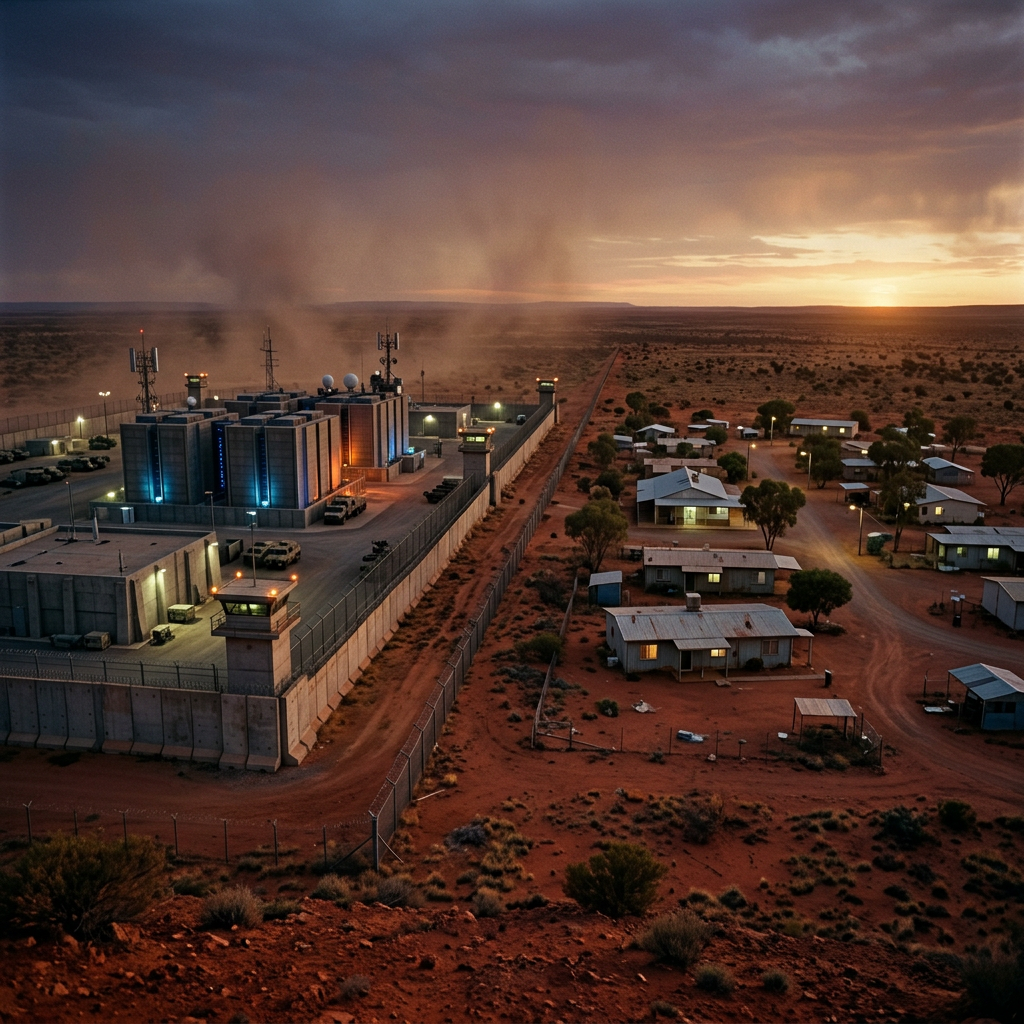



 The Patrician's Watch